
01
Nutrient Status
Micronutrients, protein adequacy, and phytonutrient intake help support cellular repair, immune function, energy, and recovery.
Precision Integrative Oncology · Phoenix, Arizona
SANAVITA Health brings together pathology, imaging, tumor molecular profiling, circulating biomarkers, relevant whole-person testing, and treatment history to help patients understand complex cancer information and create individualized integrative supportive-care plans in collaboration with their oncology team.
Testing here is selective, not exhaustive. We start with the results you already have, explain what they mean, and suggest a new test only when its answer could change a decision — then turn it all into a written plan.
Medically reviewed by Dr. Julio Cantillo, NMDHow we review
Whole-Person, Physician-Led
Treat what we can see.Understand what we can measure.Support what we can change.
SANAVITA Health provides physician-led integrative oncology support for people addressing modifiable risk factors or proactively optimizing long-term health, navigating an active diagnosis, or rebuilding after treatment. Our role is to complement your oncology care — coordinating with your team, supporting your terrain and quality of life, and helping you make informed decisions.
We do not diagnose, treat, cure, or prevent cancer. Everything we provide is adjunctive, evidence-informed, and grounded in clinical appropriateness.
Precision-informed care is not about ordering as many tests as possible. It is about choosing — and correctly interpreting — the information that can change a decision for you.
How We Personalize Care
Every step connects a finding to its meaning and then to an action. Select a step to see what happens and what you receive.
Before your consultation we review your diagnosis, pathology, imaging, treatment history, medications and supplements, any existing molecular reports, your symptoms, and — most importantly — your goals.
What we look at
Pathology and imaging reports, treatment notes, genomic results, your product list.
What it tells us
What is already known about your cancer, and what remains uncertain.
What it changes
A clear, plain-language summary of your case to build on.
Many patients already have more information than anyone has explained. We go through it with you: which findings are actionable, which might be inherited, which are uncertain, and which important questions have not been answered yet.
What we look at
A genomic report listing several variants; a marker that moved.
What it tells us
Which findings matter for treatment, which for family, which are noise.
What it changes
Focused questions to bring to your oncologist.
A new test is considered only when its result could change a treatment discussion or your supportive-care plan. We tell you what it can and cannot show, and whether SANAVITA can order it (for Arizona patients, when clinically appropriate) or whether your oncology team or another clinician should.
What we look at
An unanswered question, a new symptom, or incomplete testing.
What it tells us
Would any result change what happens next?
What it changes
One well-chosen test — or, often, none.
You receive a written integrative care plan after the initial visit. It covers symptom support, nutrition, correction of confirmed deficiencies, a medication and supplement interaction review, monitoring priorities, lifestyle measures, and what we will coordinate with your oncology team.
What we look at
Your results, symptoms, treatment plan and goals together.
What it tells us
Priorities, ranked by what matters most now.
What it changes
A written plan you can share with your oncology team.
Start with a free, 20-minute discovery call.
Schedule a Free Discovery CallThe Cancer Tree
A tree is a helpful way to sort what you are hearing. Select the canopy, the trunk or the roots — or any point on the tree — to see what each layer means, how it is measured, and what usually comes next.
The diagnosed cancer — what it is, where it is, how far it has spread — and the treatments your oncology team uses: surgery, radiation and medicines that work throughout the body.
Defines what the cancer is: its type, grade and receptor or protein markers.
CT, MRI, PET, ultrasound and mammography show the size and spread of visible disease and how it responds.
Removes the tumor when possible — and provides tissue for pathology and biomarker testing.
Treats a defined area of the body, before or after surgery or on its own.
Medicines that act throughout the body — including on microscopic disease after surgery.
Drugs matched to specific biomarkers in the tumor.
Treatments that help the immune system recognize cancer, such as checkpoint inhibitors.
Conventional oncology is not limited to what a scan can show. Chemotherapy, radiation and hormone therapy after surgery are given precisely to treat microscopic disease, and molecular biomarkers guide many treatment choices.
Sources: NCI: Types of Cancer Treatment; NCI: Targeted Therapy; NCI: Immunotherapy
Signals that carry information about the cancer’s biology — what its tissue shows, and what it releases into the blood. They connect what we can see with how the cancer behaves.
DNA, RNA and protein findings in the tumor itself — mutations, fusions, MSI, TMB, HRD, PD-L1.
Circulating tumor DNA: the small share of DNA in the blood that comes from the cancer.
Cell-free DNA: all DNA fragments in plasma, mostly from normal cells. Not the same as ctDNA.
Circulating tumor cells: whole cancer cells in the blood. Prognostic in some metastatic cancers.
Molecular (minimal) residual disease: traces of tumor DNA after treatment, below what scans can see.
Chemical tags on DNA with patterns characteristic of cancers — each assay reports its own score for its own purpose.
Proteins such as CEA, CA-125, CA 19-9 and PSA, each useful only in specific cancers.
Every marker has limits. Sensitivity (how well a test detects people who have cancer) and specificity (how well it identifies people who do not have cancer) differ by assay, cancer type and stage, and a result validated in one cancer cannot simply be applied to another.
Sources: Merker JD, et al. J Clin Oncol. 2018; Pascual J, et al. Ann Oncol. 2022; NCI: Tumor Markers
Your health beyond the tumor — nutrition, other conditions, inflammation, infections, environmental toxins, mycotoxins and heavy metals, digestion and hormones, immune and metabolic health, sleep, and how you are tolerating treatment.
Intake, weight, muscle and the ability to eat and absorb food.
Diabetes, heart, kidney or liver disease and their medicines — all part of how treatment is tolerated.
Systemic inflammation linked to weight loss and fatigue.
Clinically relevant infections, such as viruses linked to certain cancers or infections that complicate treatment.
Ongoing exposures at work, at home or in water — such as heavy metals, solvents, pesticides, or mold and its toxins (mycotoxins).
Digestive changes, hot flashes, sleep and mood shifts during or after treatment.
Infection risk, blood sugar and cardiometabolic health.
Sleep, stress and mood shape fatigue, appetite and pain.
Strength, energy and side effects — how your body is coping with treatment.
These are potential supportive-care priorities: places where support may help you feel and function better. They are not established causes of an individual’s cancer, and finding something here does not mean you caused your cancer.
Sources: Arends J, et al. Clin Nutr. 2017; Ligibel JA, et al. J Clin Oncol. 2022; Lyman GH, et al. J Clin Oncol. 2018
The tree is a way to organize information — not a model of what causes cancer, and not a promise about recurrence. The aim is to identify issues we can act on and to support your health alongside evidence-based oncology treatment.
Not sure which of your results belong where? That is exactly what the first visit is for.
Schedule a Free Discovery CallThe SANAVITA Cancer Terrain Framework
Cancer does not develop in isolation. At SANAVITA Health, we look beyond the tumor to understand the biological, environmental, metabolic, immune, emotional, and lifestyle terrain that may influence resilience, treatment tolerance, recovery, and long-term health.
This is adjunctive, evidence-informed, physician-led support — provided alongside your oncology team, never instead of it.
A terrain approach should never imply that a patient caused their cancer. Cancer biology includes genetics, chance, environment, aging, immune escape, and treatment history — much of it outside anyone’s control. Terrain work is about support, not blame. This framework does not replace oncology diagnosis, treatment, or medical decision-making.
Testing & Biomarker Explorer
Short, plain-language notes on the tests you may hear about, each labeled by strength of evidence. Not a list of tests everyone needs.
Searches stay on your device.
Established in certain indicationsStandard for every cancer diagnosis.
Sample: Tumor tissueOrdered by: Pathology, as part of your diagnosis
Sources: NCI: Biomarker Testing for Cancer Treatment; Wolff AC, et al. J Clin Oncol. 2018
Established in certain indicationsRecommended for several advanced cancers.
Sample: Tumor tissueOrdered by: Your oncology team or pathologist
Sources: Mosele F, et al. Ann Oncol. 2020; Gerlinger M, et al. N Engl J Med. 2012; Mandelker D, et al. JAMA. 2017
Established in certain indicationsFor fusion detection and specific validated assays.
Sample: Tumor tissueOrdered by: Oncology team or pathology; SANAVITA for selected analyses, when clinically appropriate
Sources: Benayed R, et al. Clin Cancer Res. 2019; Drilon A, et al. N Engl J Med. 2018; Sparano JA, et al. N Engl J Med. 2018
Emerging / investigationalInvestigational for most uses.
Sample: Tissue or bloodOrdered by: Research settings
Sources: Hayes J, et al. Trends Mol Med. 2014
Established in certain indicationsRelevant across many solid tumors.
Sample: Tumor tissueOrdered by: Pathology or your oncology team
Sources: Le DT, et al. N Engl J Med. 2015; NCI: Biomarker Testing for Cancer Treatment
Selective / context-dependentContext-dependent.
Sample: Tumor tissue or bloodOrdered by: Reported with tissue profiling
Established in certain indicationsFor specific cancers and drugs.
Sample: Tumor tissueOrdered by: Pathology, at your oncologist’s request
Sources: Reck M, et al. N Engl J Med. 2016
Established in certain indicationsNotably in advanced ovarian cancer.
Sample: Tumor tissueOrdered by: Your oncology team or pathology
Established in certain indicationsFor named cancers and matched drugs.
Sample: Tumor tissue; some in bloodOrdered by: Your oncology team or pathology
Sources: NCI: Biomarker Testing for Cancer Treatment; Wolff AC, et al. J Clin Oncol. 2018; NCCN Guidelines for Patients
Emerging / investigationalValidation and clinical benefit unproven.
Example only — not an endorsement or a partnership.
Sample: Tissue and/or bloodOrdered by: Not standard testing — discuss with your oncologist first
Sources: Datar Cancer Genetics (laboratory product description); Nagarkar R, et al. Oncotarget. 2019; Burstein HJ, et al. J Clin Oncol. 2011
Established in certain indicationsFor genotyping advanced cancer when tissue is limited.
Sample: BloodOrdered by: Oncology team, or SANAVITA for selected assays when clinically appropriate
Sources: Merker JD, et al. J Clin Oncol. 2018; Pascual J, et al. Ann Oncol. 2022; Razavi P, et al. Nat Med. 2019
Selective / context-dependentA platform, not a diagnosis.
Sample: BloodOrdered by: Part of specific assays; SANAVITA for selected tests when clinically appropriate
Sources: Merker JD, et al. J Clin Oncol. 2018
Established in certain indicationsFor genotyping; monitoring uses are cancer-specific.
Sample: BloodOrdered by: Oncology team, or SANAVITA for selected assays when clinically appropriate
Sources: Merker JD, et al. J Clin Oncol. 2018; Pascual J, et al. Ann Oncol. 2022; Razavi P, et al. Nat Med. 2019
Selective / context-dependentStrongest in colorectal cancer; still evolving.
Sample: Blood, plus tumor tissue for tumor-informed testsOrdered by: SANAVITA for Arizona patients, when clinically appropriate; decisions stay with your oncologist
Sources: Tie J, et al. N Engl J Med. 2022; Kotani D, et al. Nat Med. 2023; Pascual J, et al. Ann Oncol. 2022
Selective / context-dependentPrognostic in some metastatic cancers.
Sample: BloodOrdered by: Specialist settings; SANAVITA for selected assays when clinically appropriate
Sources: Cristofanilli M, et al. N Engl J Med. 2004; Merker JD, et al. J Clin Oncol. 2018
Selective / context-dependentEstablished for specific markers; screening uses investigational.
Sample: Tissue or bloodOrdered by: Oncology team or pathology; SANAVITA for selected analyses when clinically appropriate
Sources: Hegi ME, et al. N Engl J Med. 2005; Klein EA, et al. Ann Oncol. 2021; Schrag D, et al. Lancet. 2023
Established in certain indicationsRecommended for many people with cancer.
Sample: Blood or salivaOrdered by: SANAVITA when clinically appropriate, with referral for genetic counseling
Sources: NCI: Genetic Testing Fact Sheet; Mandelker D, et al. JAMA. 2017
Selective / context-dependentFor specific drug–gene pairs.
Sample: Blood or cheek swabOrdered by: SANAVITA when clinically appropriate
Selective / context-dependentMonitoring colorectal cancer; not screening.
Sample: BloodOrdered by: Your oncology team
Sources: Locker GY, et al. J Clin Oncol. 2006; Meyerhardt JA, et al. J Clin Oncol. 2013
Selective / context-dependentMonitoring some ovarian cancers; not screening.
Sample: BloodOrdered by: Your oncology team
Sources: Buys SS, et al. JAMA. 2011; Rustin GJS, et al. Lancet. 2010; NCI: Tumor Markers
Selective / context-dependentPancreatic and biliary cancers; not screening.
Sample: BloodOrdered by: Your oncology team
Sources: Locker GY, et al. J Clin Oncol. 2006; NCI: Tumor Marker Tests in Common Use
Established in certain indicationsProstate cancer monitoring.
Sample: BloodOrdered by: Urologist, oncologist or primary care
Sources: US Preventive Services Task Force. 2018; NCI: PSA Test
Established in certain indicationsRecommended for everyone with cancer.
Sample: History and examOrdered by: Every SANAVITA consultation
Sources: Arends J, et al. Clin Nutr. 2017; Muscaritoli M, et al. Clin Nutr. 2021
Established in certain indicationsStandard during most treatments.
Sample: BloodOrdered by: Usually your oncology team; we review rather than repeat
Selective / context-dependentWhen indicated, not as a routine panel.
Sample: BloodOrdered by: SANAVITA or your oncology team
Sources: Aapro M, et al. Ann Oncol. 2018; Manson JE, et al. N Engl J Med. 2019; US Preventive Services Task Force. 2021
Selective / context-dependentContext-dependent.
Sample: Blood and measurementsOrdered by: SANAVITA, primary care or your oncology team
Sources: Ligibel JA, et al. J Clin Oncol. 2022; Schneider BJ, et al. J Clin Oncol. 2021
Selective / context-dependentPrognostic context, not a treatment target.
Sample: BloodOrdered by: SANAVITA or your oncology team
Sources: McMillan DC. Cancer Treat Rev. 2013
Selective / context-dependentBy cancer and treatment.
Sample: BloodOrdered by: Your oncology team
Selective / context-dependentDriven by a specific cancer, treatment or symptom.
Sample: BloodOrdered by: Your oncology team, or SANAVITA in coordination
Sources: NCI: Hormone Therapy; Schneider BJ, et al. J Clin Oncol. 2021
Established in certain indicationsPart of exercise and supportive care.
Sample: Simple in-person measuresOrdered by: Part of SANAVITA’s assessment
Sources: Campbell KL, et al. Med Sci Sports Exerc. 2019; Ligibel JA, et al. J Clin Oncol. 2022
Established in certain indicationsRecommended practice — a review, not a lab test.
Sample: Your product list or bottlesOrdered by: Every SANAVITA consultation
Sources: Mathijssen RHJ, et al. J Natl Cancer Inst. 2002; MSK: About Herbs; Lyman GH, et al. J Clin Oncol. 2018
Selective / context-dependentEstablished in nasopharyngeal cancer and some lymphomas.
Sample: BloodOrdered by: Your oncology team
Sources: Chan KCA, et al. N Engl J Med. 2017; NCI: Infectious Agents
Selective / context-dependentMainly transplant and profound immunosuppression.
Sample: BloodOrdered by: Oncology, transplant or infectious-disease team
Established in certain indicationsIn throat and cervical cancers.
Sample: Tissue, cervical sample or bloodOrdered by: Pathology, oncology, gynecology or primary care
Sources: Ang KK, et al. N Engl J Med. 2010; Chera BS, et al. J Clin Oncol. 2020; NCI: Infectious Agents
Selective / context-dependentOnly with compatible exposure and symptoms.
Sample: BloodOrdered by: SANAVITA or primary care
Sources: CDC: Lyme Disease Testing
Selective / context-dependentWhen a credible exposure warrants validated testing.
Sample: Blood or urineOrdered by: SANAVITA, primary care or occupational medicine
Sources: American College of Medical Toxicology. J Med Toxicol. 2017
Emerging / investigationalResearch is still developing; useful in selected cases.
Sample: UrineOrdered by: SANAVITA, when clinically appropriate
Sources: CDC. MMWR. 2015; Hurraß J, et al. Int J Hyg Environ Health. 2017
Selective / context-dependentWhen symptoms point to it.
Sample: Stool or bloodOrdered by: SANAVITA or your medical team
Not recommended for routine useNot recommended for routine clinical use.
Sample: StoolOrdered by: Not ordered routinely
Sources: Porcari S, et al. Lancet Gastroenterol Hepatol. 2025
Bring your reports. We will tell you what they already answer.
Schedule a Free Discovery CallFrom Testing to a Care Plan
Three fictional examples show the reasoning — from a clinical question to a supportive-care action. They are illustrations, not real patients, and not recommendations for anyone’s care.
Fictional example — not a real patient, not medical advice
Clinical question
“Is there a targetable driver — and what should I take, or stop, before treatment begins?”
What the records already show
The biopsy confirms adenocarcinoma, but there was too little tissue for complete genomic profiling. The supplement list includes a concentrated green tea extract, turmeric capsules and an “immune” blend.
Selectively indicated test or marker
Plasma ctDNA genotyping, ordered by or coordinated with the oncology team while tissue questions are resolved.
What it can tell us · What it cannot tell us
What it can tell us
Find many targetable alterations from a blood sample, often faster than a repeat biopsy.
What it cannot tell us
Rule an alteration out when negative — a negative blood result may still need tissue testing.
Discussion with the oncology team
Whether to wait for the result before starting systemic therapy, and whether a repeat biopsy is needed. Those are the oncologist’s decisions.
Personalized supportive-care action
A written interaction review of every product (some concentrated extracts can affect the liver or drug-processing enzymes), a list sent to the oncology team, and a nutrition plan to protect weight and muscle before treatment.
Fictional example — not a real patient, not medical advice
Clinical question
“Why am I so exhausted, and is there anything safe that could help?”
What the records already show
Treatment includes oxaliplatin-based chemotherapy. The blood count shows anemia; kidney and liver tests are normal. Several supplements were started without discussion.
Selectively indicated test or marker
Iron studies (ferritin and transferrin saturation), vitamin B12 and folate — chosen because they could explain symptoms and are correctable.
What it can tell us · What it cannot tell us
What it can tell us
Identify iron deficiency, keeping in mind that ferritin rises with inflammation and can hide it.
What it cannot tell us
Explain all of the fatigue: treatment itself, sleep, activity and mood also contribute.
Discussion with the oncology team
If iron deficiency is confirmed, the oncology team decides how it is replaced alongside chemotherapy. New or worsening tingling is reported promptly, because it can affect oxaliplatin dosing.
Personalized supportive-care action
Correction of a confirmed deficiency in coordination with the oncologist, a graded activity plan for fatigue, sleep support, and stopping supplements without safety data during treatment.
Fictional example — not a real patient, not medical advice
Clinical question
“Could a blood test tell me whether the cancer is gone?”
What the records already show
Surgery and adjuvant chemotherapy are complete. CEA and CT scans are on the surveillance schedule, and the tumor tissue is stored.
Selectively indicated test or marker
A tumor-informed molecular (minimal) residual disease (MRD) assay — considered only after discussing what a positive or a negative result would change.
What it can tell us · What it cannot tell us
What it can tell us
Detect molecular evidence of residual disease, which is associated with a higher risk of recurrence.
What it cannot tell us
Guarantee cure when negative, or show where disease is when positive. Scans and CEA remain part of surveillance.
Discussion with the oncology team
Whether a result would change the surveillance plan or open a clinical trial, how often to repeat it, and what would happen after a positive result.
Personalized supportive-care action
A survivorship plan: physical activity, nutrition and weight goals, deficiencies checked only when indicated, sleep and stress support, and a clear follow-up rhythm with the oncology team.
Start with a free, 20-minute discovery call.
Schedule a Free Discovery Call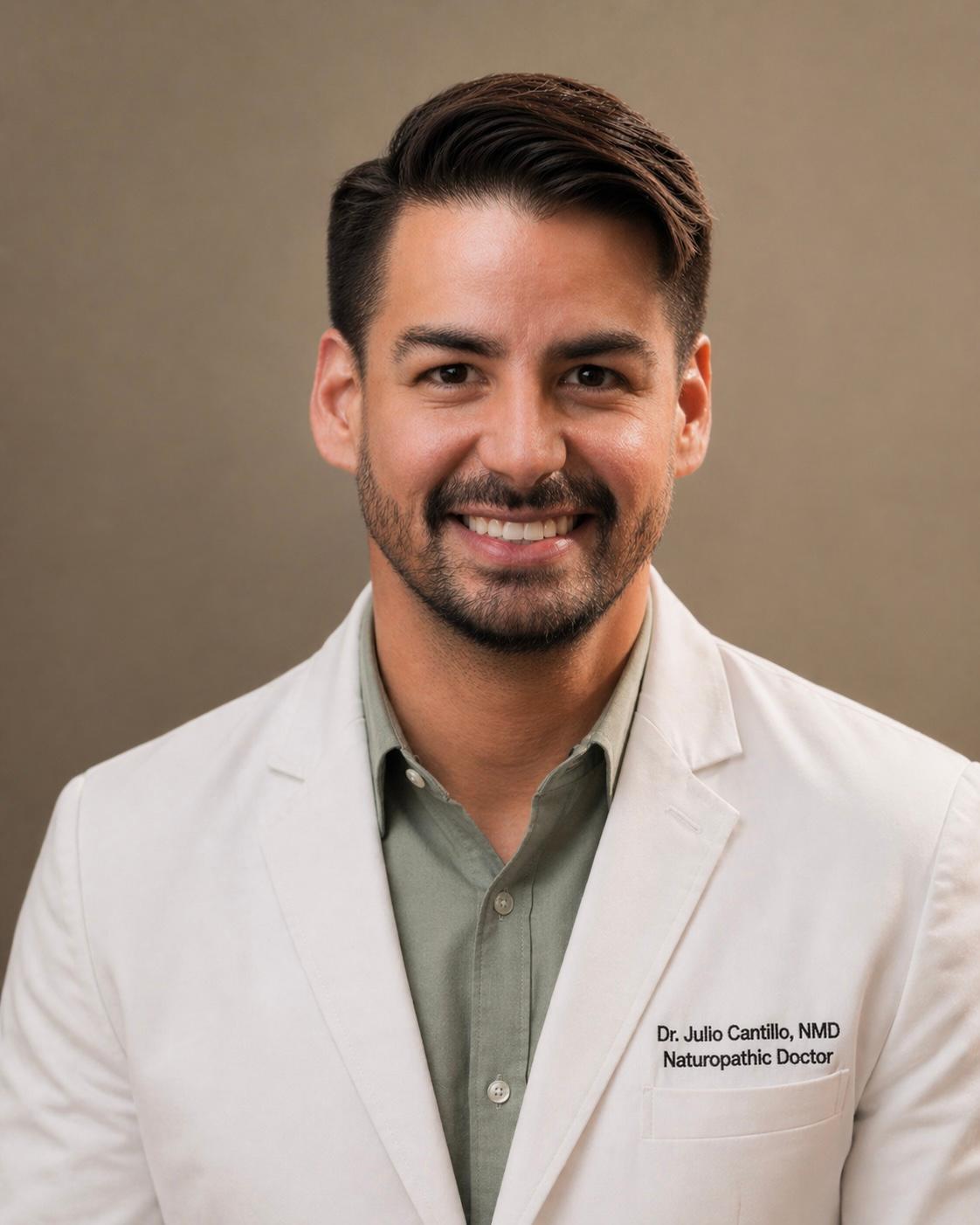
Meet Your Physician
Dr. Julio Cantillo, NMD
Naturopathic Physician · Integrative Oncology
Dr. Julio Cantillo is a naturopathic physician specializing in integrative oncology and personalized cancer care. His clinical approach combines evidence informed naturopathic medicine with modern oncology, precision medicine, and individualized patient support. After completing his undergraduate degree in Human Biochemistry at the University of Wisconsin–Madison and graduating from the Canadian College of Naturopathic Medicine, Dr. Cantillo completed advanced oncology training through a CNME approved residency program. His passion for integrative medicine is also deeply personal, shaped by his own health journey and the transformative impact naturopathic care had on his life.
Advanced Clinical Training
Dr. Julio Cantillo has completed advanced education in precision oncology, cancer biology, immunology, survivorship, and patient navigation at institutions including Johns Hopkins, Stanford, GWU, the University of Geneva, and others. This breadth of training directly informs how he supports patients navigating complex cancer care.
Concierge Program
Program duration3 months
OncoThrive is SANAVITA Health’s comprehensive, physician-led concierge program for individuals navigating cancer treatment, advanced or complex diagnoses, survivorship, or cancer-related health concerns.
The program provides personalized integrative oncology guidance, ongoing physician support, detailed case review, education, supportive-care planning, and coordination alongside the patient’s conventional oncology team.
Evaluation & care plan
Guidance & symptom support
Ongoing care & coordination
OncoThrive is designed to complement, not replace, the care provided by your medical oncologist and other treating healthcare professionals.
Integrative Oncology Programs
Programs are never one-size-fits-all. When a program is appropriate, Dr. Cantillo recommends one based on your diagnosis, stage of care, goals, oncology treatment plan, labs, terrain factors, and clinical appropriateness. Select the phase that fits your situation to see how it works.
For those who want to address modifiable risk factors, support immune function, address underlying contributors to immune suppression, and gain clarity through a personalized, lab-informed plan — supportive of long-term health.
What it supports
How it fits alongside your oncology care
A proactive, standalone program for those without an active diagnosis — focused on modifiable risk factors and terrain optimization, coordinated with your primary care when helpful.
Program selection happens after case review and your initial integrative oncology visit, when clinically appropriate — never before. Integrative oncology at SANAVITA Health is adjunctive: it is designed to support you alongside, not instead of, your oncology team.
Book a Free Discovery CallHow It Works
A thoughtful, physician-led process designed to understand your case before care begins.
Choose your physician and schedule a free discovery call directly with them.
After booking, you will receive an email with a short intake form so we can better understand your case and the type of care you are seeking.
Your physician reviews your intake form before the discovery call to understand your goals, needs, and whether SANAVITA Health may be the right fit. If your needs fall outside our scope of care, we will let you know before the call.
We use this conversation to answer initial questions, understand your situation, and determine whether our care model aligns with your needs.
If SANAVITA Health is the right fit, you will be invited to schedule an initial integrative oncology visit to establish care and discuss your case in depth.
If a program is right for you
After the initial visit and case review, Dr. Cantillo may recommend a personalized integrative oncology program if appropriate — based on your history, goals, oncology treatment plan, labs, terrain factors, and clinical needs.
Patients enrolled in a program receive ongoing support, monitoring, education, care coordination, and maintenance planning as clinically appropriate.
Phoenix, Arizona
We see patients from Phoenix, Scottsdale, and across the greater Phoenix area.
Whether you live in north Phoenix, North Scottsdale, Desert Ridge, Paradise Valley or elsewhere in Arizona, you can choose an in-person visit at our Phoenix office or a consultation by secure video.
Appointment only
In-person visits at our Phoenix office are by appointment only and as clinically indicated. There are no walk-in visits.
Secure video across Arizona
Consultations are conducted by secure video, so Arizona residents anywhere in the state can receive clinical care.
Outside Arizona
We offer educational consulting and navigation by video. This is not clinical medical care under naturopathic licensure.
Our office
SANAVITA Health7010 E Chauncey Ln #225Phoenix, AZ 85054
Questions
Often not. Many patients already have more information than anyone has explained. We start by reviewing your pathology, imaging and molecular reports — which findings are actionable, which might be inherited, and which are of uncertain significance. Additional testing is suggested only if a result could change a treatment discussion or your supportive-care plan, for example when tissue profiling was incomplete or an inherited cause has not been checked.
No. Circulating tumor DNA (ctDNA) can detect tumor DNA in the blood, but it cannot show where disease is, and some cancers shed too little DNA to detect. Blood-based tests complement imaging, pathology and clinical examination; your oncology team decides how they fit into your monitoring.
Molecular (minimal) residual disease (MRD) means traces of cancer too small to see on scans, detected in the blood with very sensitive ctDNA tests after surgery or treatment. A positive result is associated with a higher risk of recurrence. A negative result is reassuring but cannot guarantee that no cancer remains. Evidence is strongest in colorectal cancer, and routine MRD-guided treatment is not established for all cancers.
No. They are not part of a standard workup. Infection testing is considered when symptoms, exposure history or a specific cancer type make it relevant — HPV status in throat cancer, or EBV DNA in nasopharyngeal cancer, for example. Validated metal testing or urine mycotoxin testing may be considered when there is a credible exposure. We do not use “provoked” metal tests, and no test can show what caused an individual’s cancer.
Some can estimate risk — stage and pathology, certain gene-expression scores in early breast cancer, and MRD results in some cancers. None can say with certainty whether cancer will return, and no supportive-care plan can guarantee that it will not. Our role is to help you understand your risk information and to support your health alongside your oncology team’s surveillance plan.
Yes — that is how we work. Integrative oncology at SANAVITA Health is adjunctive: it complements, supports and coordinates with your oncology care. We never advise patients to forgo conventional treatment, and your written plan and product list are made to be shared with your oncology team.
After the 90-minute initial consultation you receive a written integrative care plan. If ongoing support is appropriate, Dr. Cantillo may recommend a program — such as OncoThrive, a 3-month concierge program. Program pricing is provided only after case review and the initial visit, and enrolling is your choice.
It depends on the test, your diagnosis and your plan. Guideline-recommended tests ordered for a recognized indication may be covered; many specialty and investigational tests are not. Ask the laboratory for a cost estimate and check with your insurer before testing. SANAVITA Health does not accept insurance for visits — services are private-pay — and some patients use HSA or FSA funds, depending on their plan.
Sources
National Cancer Institute and national-guideline resources, and the peer-reviewed studies behind specific statements on this page. Each test card links to the sources for that card.
Featured Resources
Cancer terrain, treatment support, survivorship, biomarkers, and precision oncology education — written to complement the care you receive from your oncology team.

What Is Integrative Oncology?
A physician’s plain-language explanation of integrative oncology — evidence-informed, whole-person support that works alongside your oncology team.

What Is Integrative Oncology?
Why “integrative” and “alternative” are not the same — and why the distinction matters for safe, coordinated cancer care.

What Is Integrative Oncology?
Practical, respectful ways to open a conversation with your oncologist about nutrition, supplements, and supportive care.
Begin with a complimentary discovery call to learn whether SANAVITA Health's integrative oncology support may be aligned with your needs.
Integrative OncologyLed by Dr. Julio Cantillo, NMD
Book Now