The short version
Why do bodies age? In 2013, a group of scientists proposed nine "hallmarks of aging" — shared biological processes that appear to drive aging across many species. In 2023, they expanded the list to twelve. The hallmarks have become one of the most influential maps in aging research. But they are a map, not a to-do list: much of the evidence comes from laboratory studies, the hallmarks are deeply interconnected, and treatments aimed at individual hallmarks are still experimental in people. This guide explains the twelve hallmarks in plain language, what has been tested in humans, and why the everyday foundations still matter most.
Why the hallmarks matter
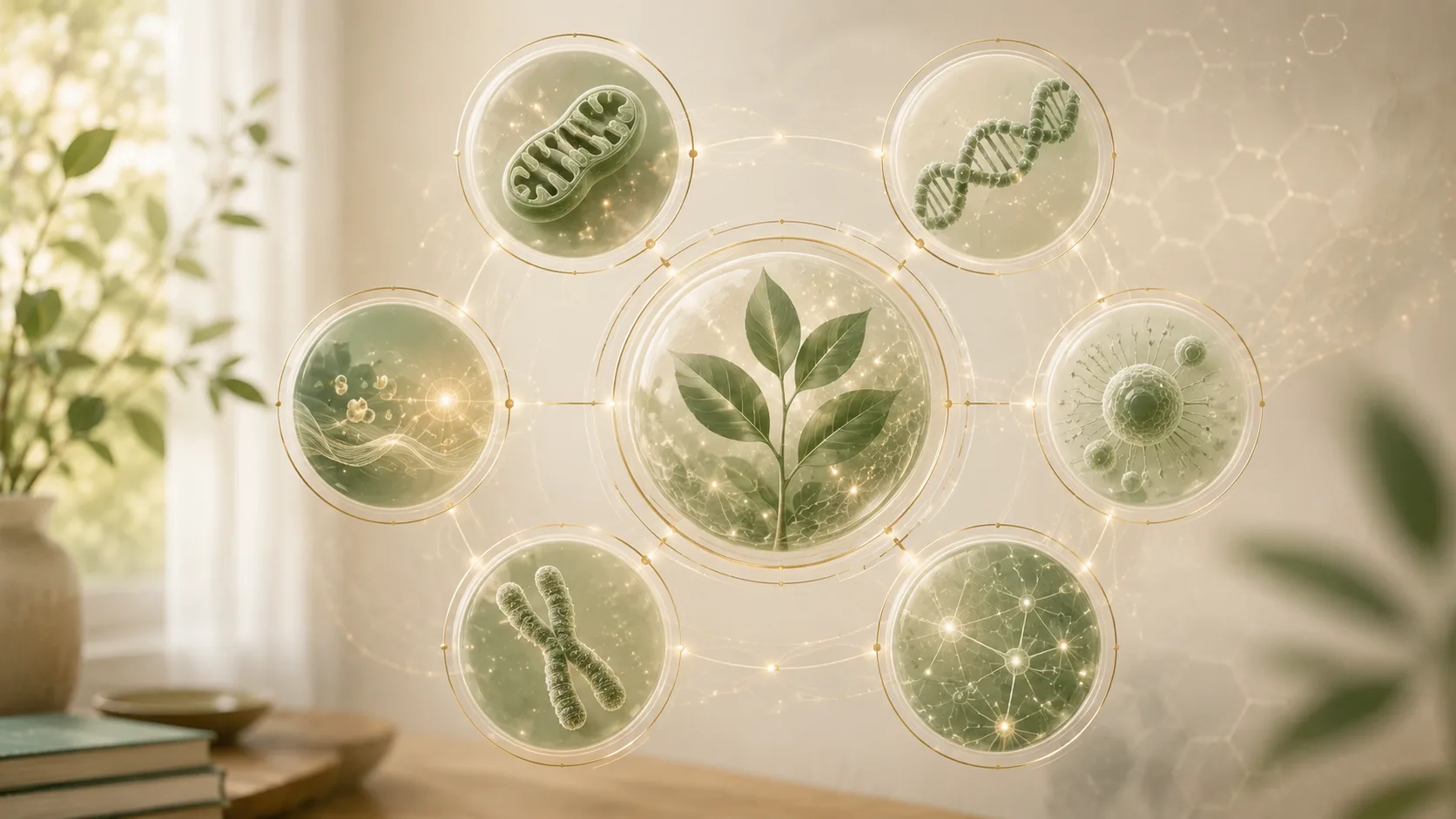
The hallmarks of aging are biological processes scientists use to understand why bodies change over time. They include genomic instability, epigenetic alterations, mitochondrial dysfunction, nutrient-sensing changes, cellular senescence, chronic inflammation, dysbiosis, and more.
The original 2013 review described nine hallmarks (López-Otín, Cell, 2013). The 2023 update added three more — disabled macroautophagy, chronic inflammation and dysbiosis — and set out three tests that any hallmark should pass: it appears with normal aging; making it worse in experiments accelerates aging; and correcting it offers a chance to slow, stop or reverse aging (López-Otín, Cell, 2023).
The twelve hallmarks in plain language
Grouped here for simplicity:
Damage to the cell's instructions
- Genomic instability: damage to DNA builds up over a lifetime.
- Telomere attrition: the protective caps on the ends of chromosomes shorten.
- Epigenetic alterations: the chemical tags that switch genes on and off drift with age. The "epigenetic clocks" used to estimate biological age are built from these patterns.
Breakdown in cellular maintenance
- Loss of proteostasis: cells become less able to fold, maintain and clear their proteins.
- Disabled macroautophagy: the cell's recycling system, which breaks down worn-out parts, slows down.
Energy and nutrient signals
- Deregulated nutrient sensing: the pathways that sense food and growth signals, including insulin signaling, become less finely tuned.
- Mitochondrial dysfunction: the cell's energy producers decline in quality and function (Sun, Molecular Cell, 2016). Levels of NAD+, a molecule central to energy metabolism and DNA repair, also fall with age in animals and in people (Covarrubias, Nature Reviews Molecular Cell Biology, 2021).
Cells that stop working well
- Cellular senescence: damaged cells stop dividing but do not die, and they release inflammatory signals.
- Stem cell exhaustion: the reserves that repair and renew tissues dwindle.
Whole-body communication
- Altered intercellular communication: signaling between cells and organs, including hormones, changes.
- Chronic inflammation: a low-grade, persistent inflammatory state, sometimes called "inflammaging".
- Dysbiosis: the community of microbes in the gut shifts in ways linked with aging and disease.
A map, not a checklist
The hallmarks are not a simple checklist for patients to fix one by one. They are a framework for thinking about interconnected systems.
The authors themselves stress that the hallmarks are connected to one another (López-Otín, Cell, 2023). Failing mitochondria, for example, are thought to contribute to cellular senescence, chronic inflammation and the age-related decline in stem cell activity (Sun, Molecular Cell, 2016). Pulling on one thread moves the others.
From the laboratory to people
Much of the evidence behind the hallmarks comes from laboratory organisms such as yeast, worms, flies and mice. Moving from there to people is slow, and promising animal results often do not translate.
Senolytics show both the promise and the caution. These drugs are designed to clear senescent cells, and in animal studies they have delayed or eased a long list of age-related conditions. Early pilot trials in humans suggest they can reduce senescent cells and inflammation — but the researchers who helped develop them concluded that it is too early for senolytics to be used outside clinical trials (Kirkland, Journal of Internal Medicine, 2020).
NAD+ is similar. In laboratory and animal research, restoring NAD+ has slowed or even reversed several age-related conditions, but how to do so effectively in people, whether it is safe, and whether it brings real benefits in aging humans are still open questions (Covarrubias, Nature Reviews Molecular Cell Biology, 2021).
So be cautious with clinics or products that promise to "reverse" a specific hallmark.
Where lifestyle fits
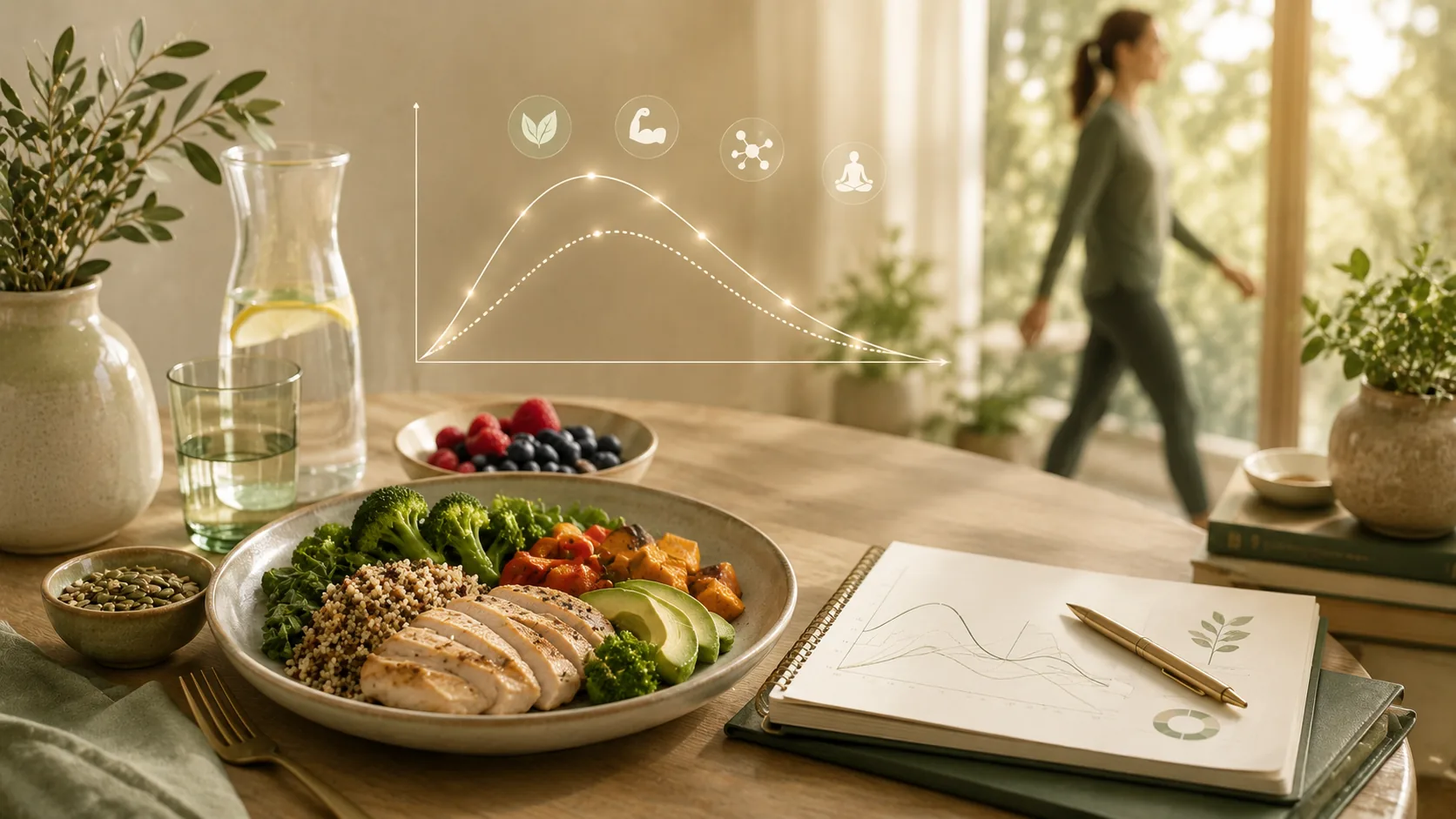
Exercise, nutrition, sleep, stress regulation, metabolic health, and avoidance of harmful exposures may influence several aging pathways at once.
Exercise is the best-studied example. A review of the evidence concluded that regular exercise attenuates the major hallmarks of aging, with benefits across many of the body's systems at once (Garatachea, Rejuvenation Research, 2015). That breadth — many hallmarks at once — is why exercise remains the foundation of longevity care.
Clinical use
A longevity visit translates this biology into practical questions: What can we measure, what can we safely change, and what matters most for your goals?
In practice, few hallmarks can be measured directly in a clinic. The measures that are available — blood pressure, blood sugar, lipids, waist size, fitness and strength — often reflect several hallmarks at once, and they respond to change.
Practical takeaways
- The hallmarks of aging are twelve interconnected biological processes — a research map, not a checklist.
- Much of the evidence comes from laboratory studies; treatments aimed at single hallmarks are still experimental in people.
- Exercise is the best-studied way to influence many hallmarks at once.
- The strongest foundations are usually sleep, movement, metabolic health, nutrition, stress physiology, and reducing avoidable risk.
- Supplements, hormones, and advanced testing should be individualized and clinically supervised.
How SANAVITA Health approaches this
SANAVITA Health approaches longevity through a physician-led, whole-person lens. We focus on education, biomarkers, metabolic resilience, hormonal context, mitochondrial and cellular health, cognitive protection, and sustainable habits that fit the patient’s life.