The short version
The end of active treatment is a milestone — and often a surprisingly hard one. Visits become less frequent, the structure of treatment disappears, and many people feel exhausted, anxious and unsure what to do next. That is normal. The first three months are a time to recover, rebuild strength gradually, understand your follow-up plan, and get support for fatigue and worry. This article covers what to expect, what the evidence supports for recovery, and a practical plan for the first 90 days.
The transition can be emotional
Finishing treatment can bring relief, exhaustion, anxiety, grief, and uncertainty all at once. Many patients expect to feel instantly normal, but recovery often unfolds gradually.
Part of what makes this period hard is that the safety net changes. During treatment, you saw your care team often and every symptom had someone to ask. Afterward, appointments space out — just as you are adjusting to life after a major medical experience.
Fear of recurrence is common — and worth addressing
Worry that the cancer will come back is one of the most common concerns after treatment. A systematic review of 130 studies found that survivors rank fear of recurrence among their greatest concerns and most frequently reported unmet needs, and that it tends to stay stable over time rather than fading on its own. It was more intense in younger survivors and in people with more physical symptoms or psychological distress, and family caregivers often reported even higher levels than patients (Simard, Journal of Cancer Survivorship, 2013).
That matters because it means you do not have to wait for the fear to pass. Mindfulness-based programs, yoga, acupuncture, and tai chi or qigong are among the approaches recommended for anxiety after cancer treatment (Carlson, Journal of Clinical Oncology, 2023). Talking with your care team about a specific worry — a symptom, a scan, a test result — is also part of managing it.
Fatigue: what actually helps
Fatigue often lasts well beyond the last treatment. Rest is not usually the answer to persistent cancer-related fatigue. The American Society of Clinical Oncology and the Society for Integrative Oncology recommend exercise, cognitive behavioral therapy and mindfulness-based programs for fatigue after treatment, with yoga, acupressure and moxibustion as additional options. The same guideline recommends against L-carnitine, antidepressants and wakefulness agents for fatigue, and against routine use of stimulants (Bower, Journal of Clinical Oncology, 2024).
If you notice new or unusual fatigue, mention it to your oncology team — it can have treatable causes, such as anemia, thyroid changes, poor sleep or low mood.
Rebuilding capacity
Start with what is safe and repeatable. Walking, mobility work, protein-forward meals, hydration, consistent sleep-wake timing, and gradual strength training can help rebuild capacity when approved by the care team.
The evidence for exercise after cancer is strong. An international roundtable convened by the American College of Sports Medicine found consistent benefits of exercise for fatigue, quality of life, physical function, anxiety and depressive symptoms, and recommended combining aerobic exercise with resistance training (Campbell, Medicine & Science in Sports & Exercise, 2019). The goal is to build up gradually: something every day is far better than an ambitious plan you cannot keep.
A survivorship map
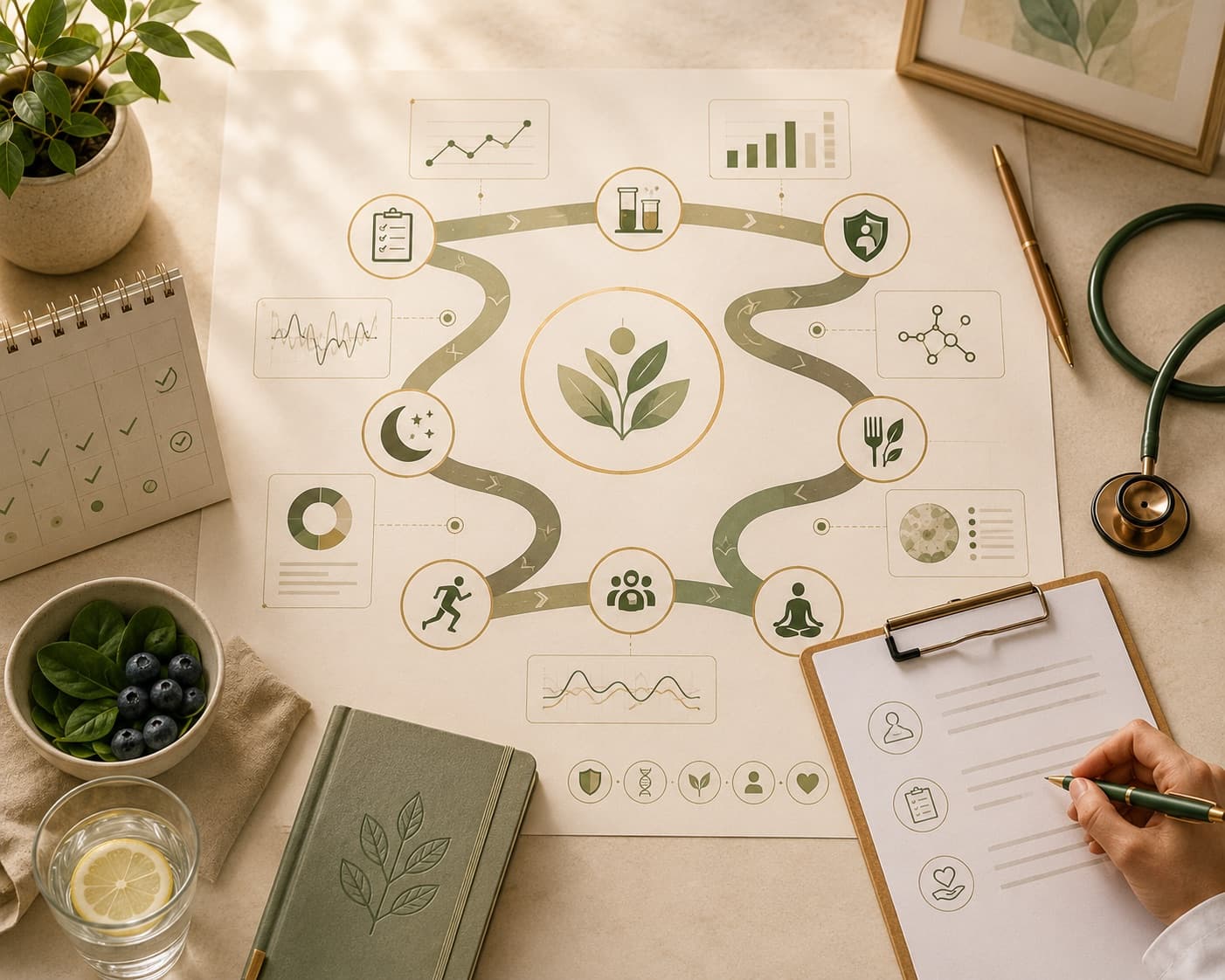
A written plan can reduce uncertainty: upcoming scans, labs, red-flag symptoms, medication list, rehab referrals, nutrition goals, fatigue plan, and supportive therapies.
The idea of a written survivorship care plan was championed by the Institute of Medicine's landmark report on cancer survivorship, which recommended that every patient finishing treatment receive a summary of their treatment and a plan for follow-up care (Institute of Medicine, From Cancer Patient to Cancer Survivor: Lost in Transition, 2006). If you have not received one, it is reasonable to ask. A useful plan answers:
- What treatment did I receive? Drugs, doses, radiation sites and surgeries.
- What is my follow-up schedule? Visits, scans and blood tests, and who orders them.
- What late effects should I watch for? Based on the specific treatments you had.
- Which symptoms should I report right away, and who do I call?
- Who coordinates my care between my oncologist and my primary care physician?
A practical 90-day plan
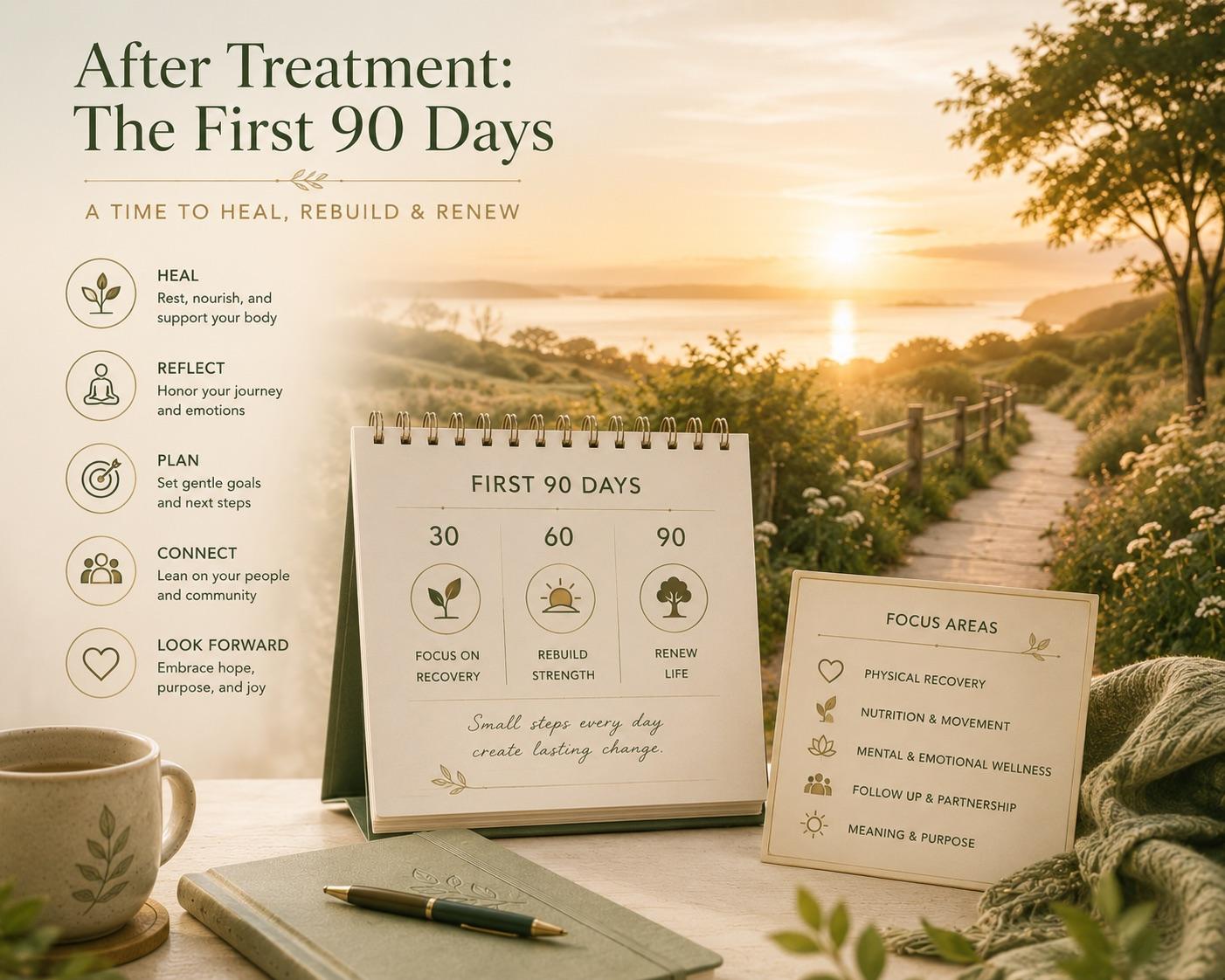
- Weeks 1–4: recover and organize. Prioritize sleep, regular meals with adequate protein, and short daily walks. Gather your treatment summary, medication list and follow-up schedule in one place.
- Weeks 5–8: rebuild. Gradually increase walking, and add gentle strength exercises two days a week if your team agrees. Notice what drains you and what restores you.
- Weeks 9–12: look ahead. Review how fatigue, sleep, mood and strength are changing. Decide which supports are helping, and which longer-term goals — work, activity, nutrition — you want to set next.
These are general suggestions, not a prescription. Your pace will depend on your treatment, your energy and any complications, and some people need longer.
Practical takeaways
- The end of treatment is a transition, not a finish line — feeling unsettled is common and expected.
- Fear of recurrence is common and tends not to fade on its own; mindfulness, yoga and other supports can help.
- For lingering fatigue, exercise, cognitive behavioral therapy and mindfulness programs have the best evidence.
- Rebuild gradually: sleep, protein, walking and gentle strength work before anything advanced.
- Ask for a written survivorship plan covering your surveillance schedule, late effects to watch for, and who to call.
- Bring new or persistent symptoms to your oncology team rather than waiting for the next scheduled scan.
How SANAVITA Health approaches this
SANAVITA Health provides physician-led integrative oncology education and support with a focus on clarity, safety, whole-person care, and collaboration. The goal is to help patients understand their options, reduce avoidable risk, and build a supportive plan that fits their diagnosis, treatment phase, values, and care team recommendations.