Survivorship
Cognitive Fatigue After Chemotherapy: Causes and Solutions
Medically reviewed by Dr. Julio Cantillo, NMD How we review
What cognitive fatigue can feel like
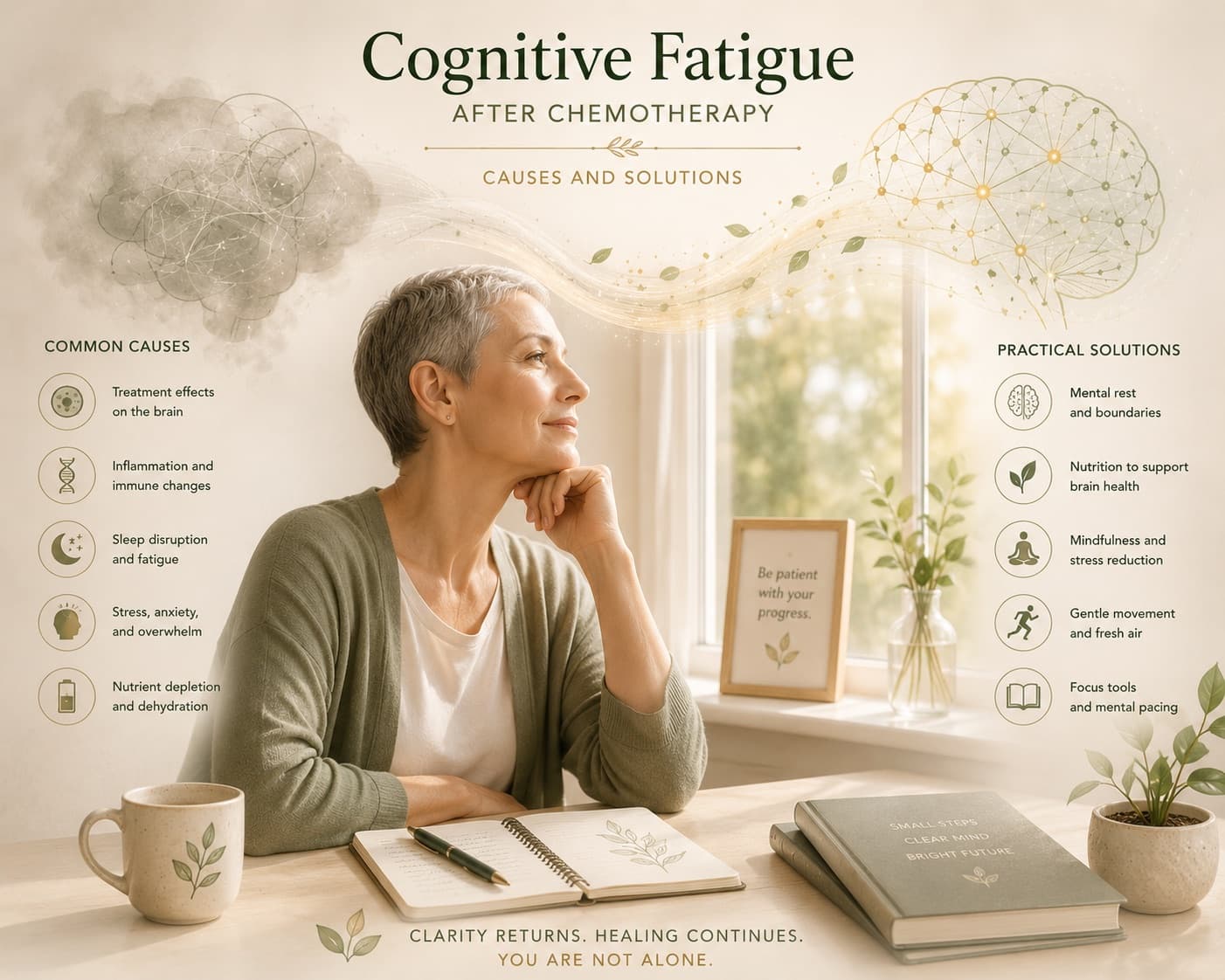
Patients may describe word-finding difficulty, slower processing, poor concentration, forgetfulness, mental exhaustion, or feeling less sharp than before treatment. This can be frustrating and emotionally distressing.
Possible contributors
Cognitive fatigue may be influenced by chemotherapy, endocrine therapy, inflammation, anemia, sleep disruption, pain, depression, anxiety, menopause symptoms, medications, dehydration, and deconditioning (Bower et al., ASCO Guideline on Management of Fatigue in Adult Survivors of Cancer).
Practical strategies
Helpful strategies may include structured sleep, walking or exercise when safe, task batching, written reminders, hydration, protein adequacy, addressing anemia or thyroid concerns when present, and referral to rehab, occupational therapy, or neuropsychology when needed (Ligibel et al., ASCO Guideline on Exercise, Diet, and Weight Management During Cancer Treatment, 2022).
When to seek medical evaluation
New severe confusion, neurologic symptoms, severe headaches, falls, medication changes, or rapidly worsening cognition should be evaluated promptly.
Practical takeaways
- Cognitive fatigue after chemotherapy is real, usually mild to moderate, and for most people it improves.
- Look for reversible contributors first: anaemia, thyroid function, sleep, pain, mood and medications.
- Exercise has better evidence for cancer-related fatigue than any supplement.
- Sudden or severe cognitive change is a reason to be evaluated promptly, not to wait it out.
How SANAVITA Health approaches this
SANAVITA Health provides physician-led integrative oncology education and support with a focus on clarity, safety, whole-person care, and collaboration. The goal is to help patients understand their options, reduce avoidable risk, and build a supportive plan that fits their diagnosis, treatment phase, values, and care team recommendations.
Research references
- Bower JE, et al. Management of Fatigue in Adult Survivors of Cancer: ASCO Guideline Update. Journal of Clinical Oncology. 2024 https://pmc.ncbi.nlm.nih.gov/articles/PMC12082589/
- Latte-Naor S, Mao JJ. Putting Integrative Oncology Into Practice. Journal of Oncology Practice. 2019 https://pmc.ncbi.nlm.nih.gov/articles/PMC6333385/
- Ligibel JA, et al. Exercise, Diet, and Weight Management During Cancer Treatment: ASCO Guideline. Journal of Clinical Oncology. 2022 https://ascopubs.org/doi/10.1200/JCO.22.00687
- National Cancer Institute. Nutrition During Cancer Treatment. Updated 2024 https://www.cancer.gov/about-cancer/treatment/side-effects/nutrition