Cancer Terrain
Blood Sugar, Insulin, and Cancer Risk
Medically reviewed by Dr. Julio Cantillo, NMD How we review
Why metabolism matters
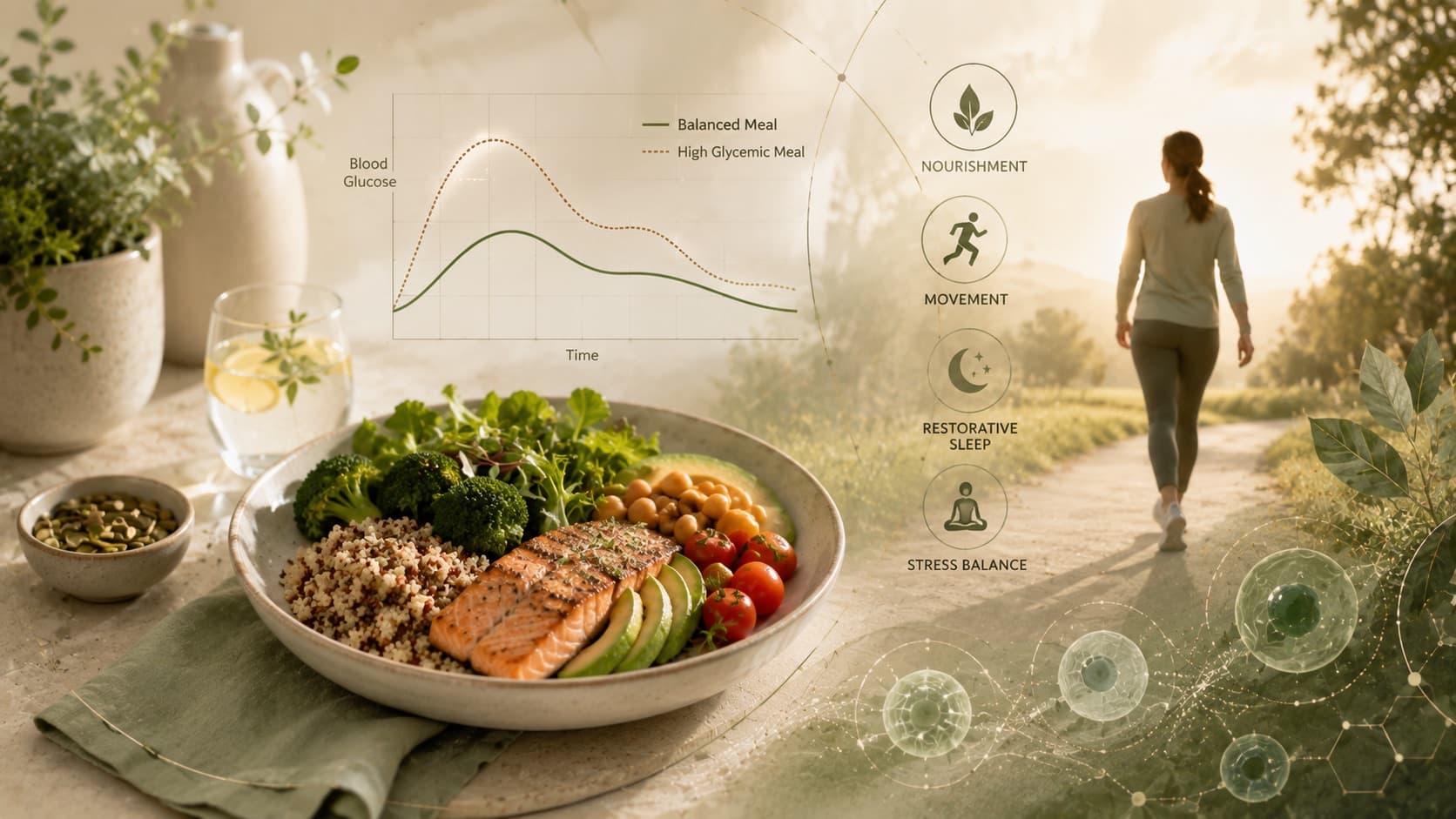
Insulin is a growth-signaling hormone as well as a blood sugar regulator. Insulin resistance and chronic hyperinsulinemia have been studied in relation to obesity, diabetes, inflammation, and cancer risk. This does not mean sugar directly “feeds cancer” in a simplistic way, but metabolic health is part of the broader cancer terrain (Szablewski, Current Oncology, 2024).
Avoid oversimplified sugar fear
Every cell uses glucose, including healthy brain and immune cells. The goal is not fear-based restriction. The goal is stable energy, adequate nourishment, muscle preservation, and metabolic flexibility when clinically appropriate.
Practical foundations
A supportive plan often emphasizes protein at meals, fiber-rich carbohydrates when tolerated, healthy fats, resistance training, walking after meals when safe, sleep, and medication review. For patients losing weight or struggling to eat during treatment, adequate calories may be more important than glucose optimization (Ligibel et al., ASCO Guideline on Exercise, Diet, and Weight Management During Cancer Treatment, 2022).
When to individualize
Patients with cachexia, poor appetite, nausea, steroids, diabetes medications, pancreatic cancer, tube feeding, or advanced disease need individualized nutrition and medical guidance.
Practical takeaways
- Metabolic health deserves attention, but “sugar feeds cancer” is an oversimplification that leads to unnecessary fear and restriction.
- Steroids, some targeted therapies and hormone treatments raise blood sugar — this is common, expected and manageable.
- The foundations are protein, fibre, movement after meals and sleep — not elimination diets.
- New or worsening high blood sugar during treatment goes to your oncology team; it is not something to self-manage.
How SANAVITA Health approaches this
SANAVITA Health provides physician-led integrative oncology education and support with a focus on clarity, safety, whole-person care, and collaboration. The goal is to help patients understand their options, reduce avoidable risk, and build a supportive plan that fits their diagnosis, treatment phase, values, and care team recommendations.
Research references
- Subedi BK, et al. The Role of Insulin Resistance in Cancer. 2025 https://pmc.ncbi.nlm.nih.gov/articles/PMC12468734/
- Szablewski L. Insulin Resistance: The Increased Risk of Cancers. Current Oncology. 2024 https://www.mdpi.com/1718-7729/31/2/75
- World Cancer Research Fund. Diet, nutrition, physical activity and cancer prevention resources https://www.wcrf.org/
- Ligibel JA, et al. Exercise, Diet, and Weight Management During Cancer Treatment: ASCO Guideline. Journal of Clinical Oncology. 2022 https://ascopubs.org/doi/10.1200/JCO.22.00687