Cancer Terrain
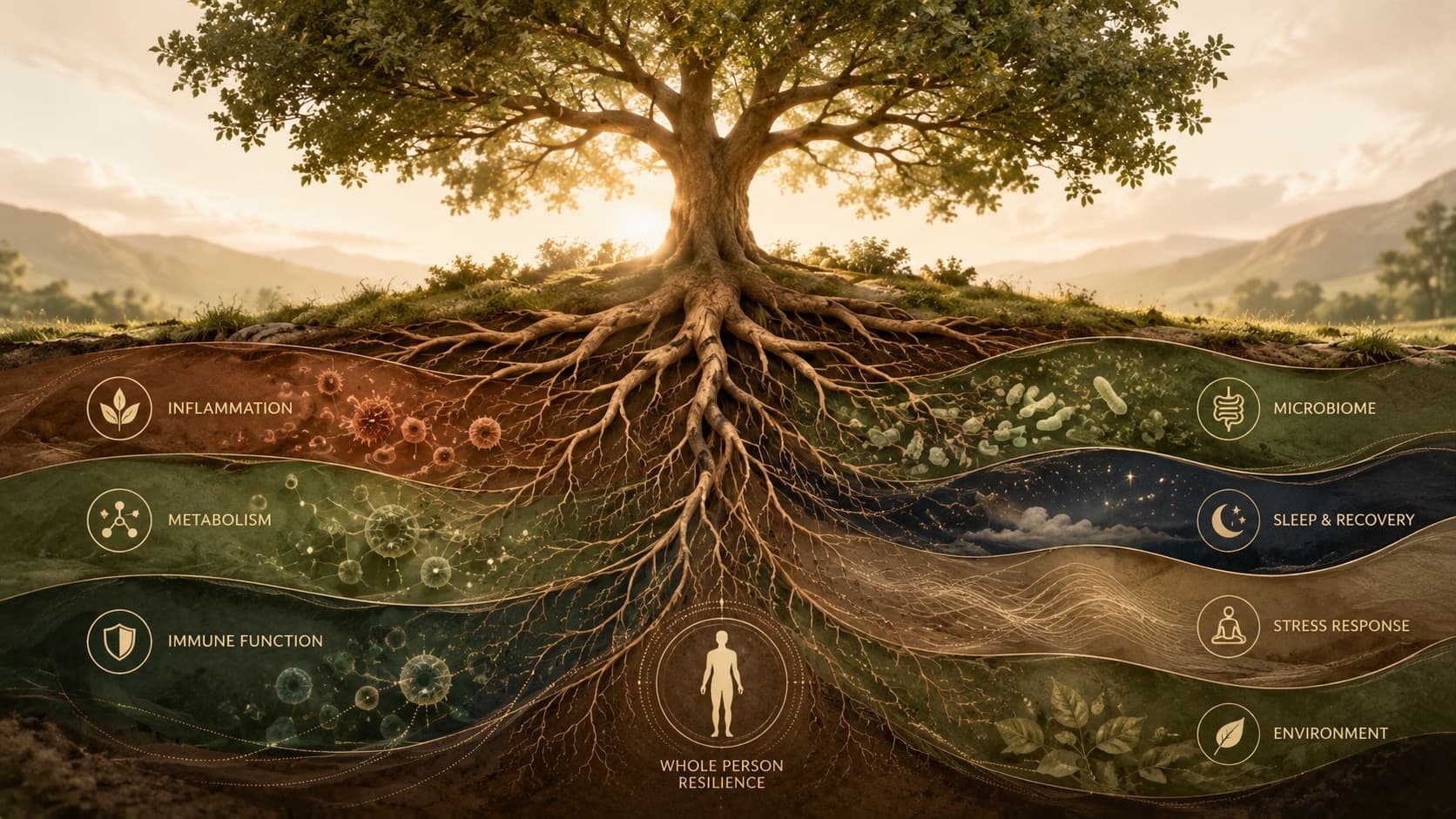
The Tree Metaphor: Understanding the Cancer Terrain
Medically reviewed by Dr. Julio Cantillo, NMD How we review
Why the tree metaphor helps
Cancer is often discussed as the visible “branch”: the tumor, scan finding, stage, or pathology report. The terrain metaphor asks about the “soil” around the tree: inflammation, metabolism, immune function, microbiome, sleep, stress physiology, toxicant exposures, nutrition status, and resilience (Latte-Naor & Mao, Journal of Oncology Practice, 2019).
Terrain is not blame
A terrain approach should never imply that a patient caused their cancer. Cancer biology is complex and includes genetics, chance, environment, aging, immune escape, treatment history, and many factors outside personal control. Terrain work is about support, not blame.
What can be addressed
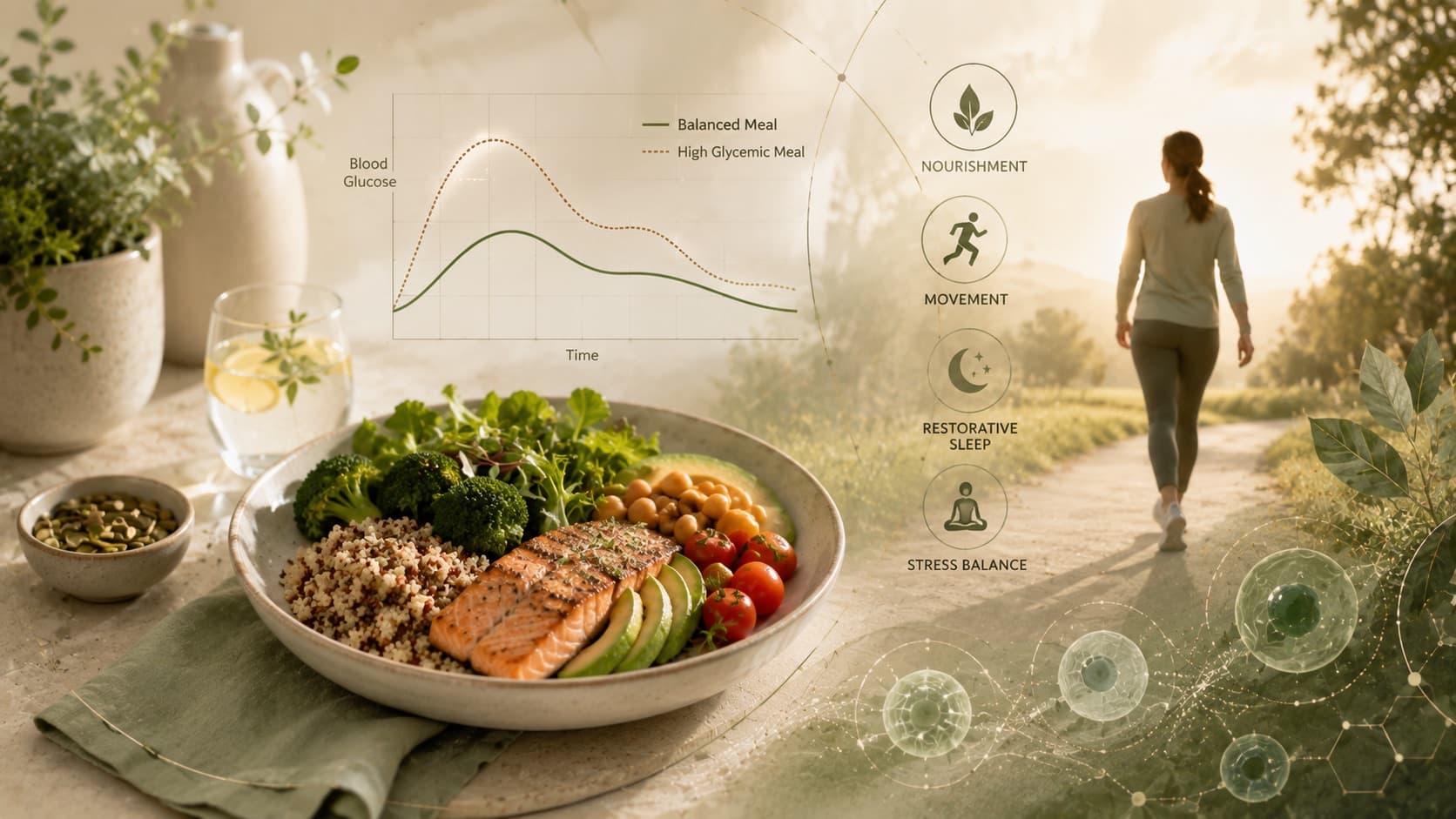
Some terrain factors may be modifiable, such as protein intake, blood sugar patterns, muscle mass, sleep, physical activity, inflammation signals, gut function, and medication/supplement safety. Other factors require oncology-directed treatment.
How to use the metaphor wisely
The tree metaphor is most useful when it helps patients ask better questions and build safer routines. It becomes harmful when it is used to promote oversimplified “root cause” claims or to discourage evidence-based cancer care.
Practical takeaways
- Terrain is about support, not blame — nothing here implies you caused your cancer.
- The metaphor is useful when it helps you ask better questions, and harmful when it becomes a “root cause” claim.
- Addressing terrain factors does not treat cancer; your oncology treatment does that.
- The most modifiable factors are the least glamorous: protein, movement, sleep, symptom control and medication safety.
How SANAVITA Health approaches this
SANAVITA Health provides physician-led integrative oncology education and support with a focus on clarity, safety, whole-person care, and collaboration. The goal is to help patients understand their options, reduce avoidable risk, and build a supportive plan that fits their diagnosis, treatment phase, values, and care team recommendations.
Research references
- Latte-Naor S, Mao JJ. Putting Integrative Oncology Into Practice. Journal of Oncology Practice. 2019 https://pmc.ncbi.nlm.nih.gov/articles/PMC6333385/
- World Cancer Research Fund. Diet, nutrition, physical activity and cancer prevention resources https://www.wcrf.org/
- Greten FR, Grivennikov SI. Inflammation and Cancer: Triggers, Mechanisms and Consequences. Immunity. 2019 https://pmc.ncbi.nlm.nih.gov/articles/PMC6831096/
- Subedi BK, et al. The Role of Insulin Resistance in Cancer. 2025 https://pmc.ncbi.nlm.nih.gov/articles/PMC12468734/
- Kang X, et al. Modulating gut microbiome in cancer immunotherapy. Cell Reports Medicine. 2024 https://pmc.ncbi.nlm.nih.gov/articles/PMC11031381/