Nutrition During Cancer Care
Fasting and Cancer: What the Research Actually Says
Medically reviewed by Dr. Julio Cantillo, NMD How we review
Why fasting is being studied
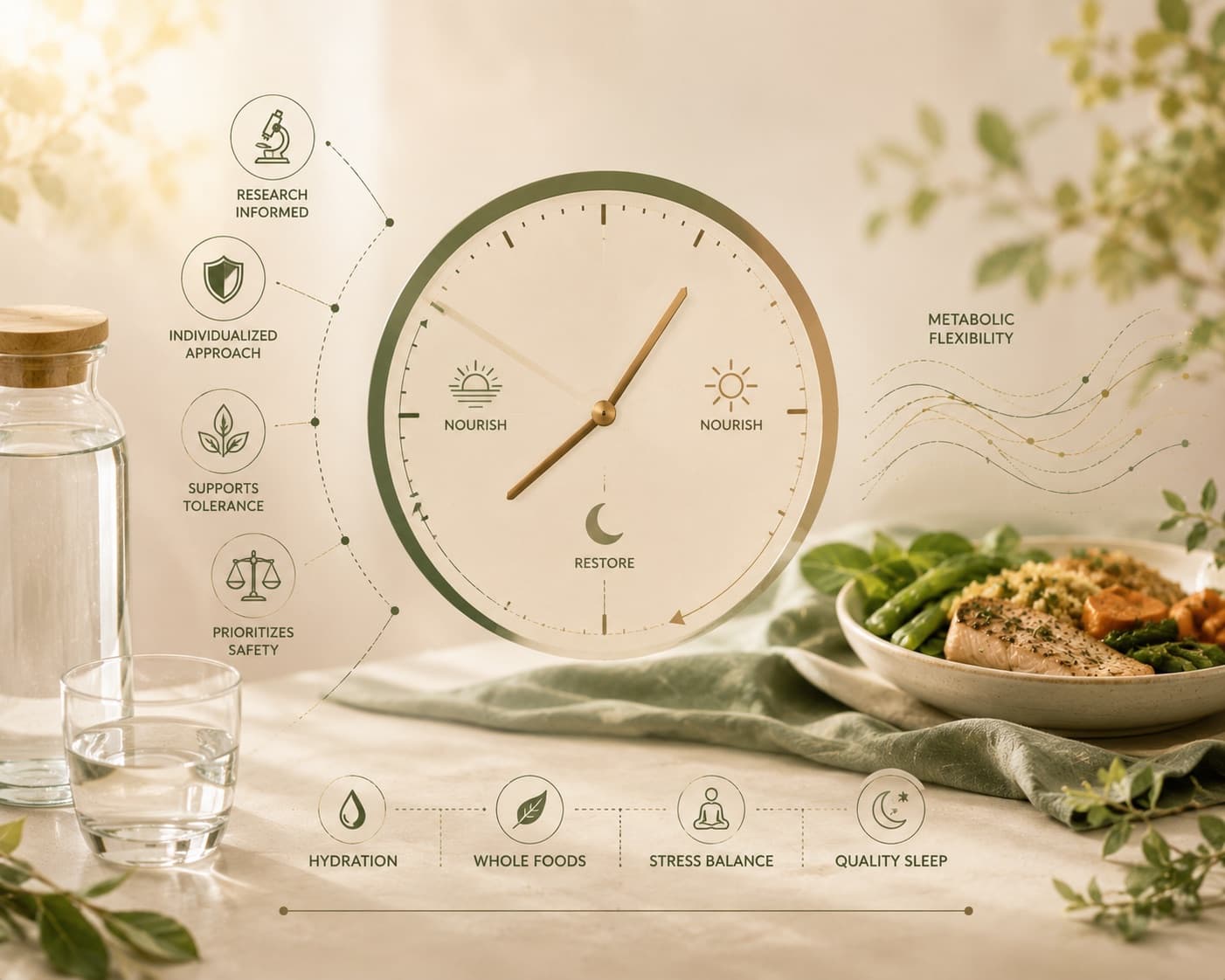
Fasting and fasting-mimicking diets are being studied because they may influence glucose, insulin, growth signaling, inflammation, and stress-resistance pathways. Early research is interesting, but it is not a universal recommendation (Brandhorst et al., GeroScience, 2021).
The evidence is still developing
Clinical studies suggest fasting-mimicking approaches may be feasible in carefully selected patients, but results are not definitive across cancer types and treatments. Safety depends on nutritional status, body weight, medications, treatment intensity, and disease stage (Valdemarin et al., Cancers, 2021).
Who should avoid fasting without close supervision
Patients with unintended weight loss, cachexia, low BMI, eating disorder history, diabetes medications, pregnancy, poor oral intake, kidney disease, frailty, or intensive treatment schedules should not fast without medical guidance.
A safer conversation
Instead of asking “Should I fast?” patients can ask, “Given my treatment, weight, labs, and goals, is any form of meal timing appropriate, or would it create risk?”
Practical takeaways
- Fasting during cancer treatment is an area of active research, not established practice.
- Anyone losing weight, undernourished, diabetic or frail should not fast without close supervision.
- Weight and muscle loss during treatment carry real risk — a fasting plan must never be the cause of them.
- If you want to try a fasting approach, do it with your oncology team's knowledge and a dietitian involved.
How SANAVITA Health approaches this
SANAVITA Health provides physician-led integrative oncology education and support with a focus on clarity, safety, whole-person care, and collaboration. The goal is to help patients understand their options, reduce avoidable risk, and build a supportive plan that fits their diagnosis, treatment phase, values, and care team recommendations.
Research references
- Brandhorst S, et al. Fasting and fasting-mimicking diets for chemotherapy augmentation. Geroscience. 2021 https://pmc.ncbi.nlm.nih.gov/articles/PMC8190229/
- Valdemarin F, et al. Safety and Feasibility of Fasting-Mimicking Diet and Effects on Nutritional Status and Circulating Metabolic and Inflammatory Factors in Cancer Patients. Cancers. 2021 https://pmc.ncbi.nlm.nih.gov/articles/PMC8391327/
- National Cancer Institute. Nutrition During Cancer Treatment. Updated 2024 https://www.cancer.gov/about-cancer/treatment/side-effects/nutrition
- Ligibel JA, et al. Exercise, Diet, and Weight Management During Cancer Treatment: ASCO Guideline. Journal of Clinical Oncology. 2022 https://ascopubs.org/doi/10.1200/JCO.22.00687