The short version
Your immune system does more than fight infections. It also patrols the body for abnormal cells, and it can recognize and destroy some cancer cells before they cause harm. Cancers that grow have usually found ways to hide from that response or switch it off — and modern immunotherapy works by undoing some of those tricks. Understanding this helps explain why "boosting immunity" is the wrong goal in cancer care. The aim is a balanced, well-supported immune system that works alongside your treatment. This article explains how the immune system responds to cancer, how tumors escape, and what genuinely supports immune health.
Immune surveillance in simple terms
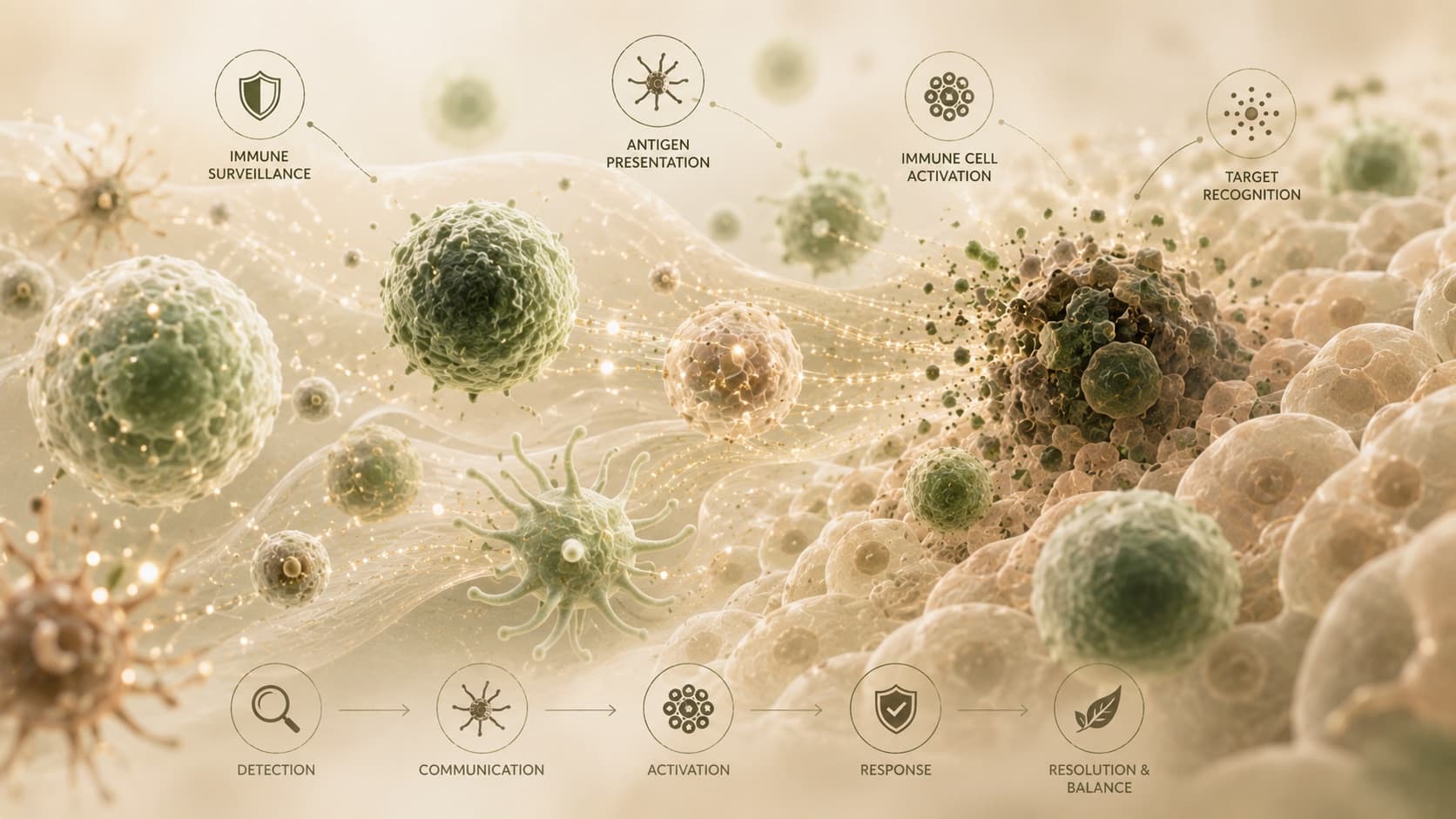
The immune system constantly samples the body for abnormal cells, infections, and signals of danger. Cancer can emerge when abnormal cells acquire ways to grow, avoid immune detection, or create a microenvironment that suppresses immune attack (Deng, Biomedicines, 2021).
The evidence that immunity matters
Two kinds of evidence show that the immune system helps keep cancer in check. First, people whose immune systems are deliberately suppressed develop more cancers. In a study of more than 175,000 organ transplant recipients in the United States, who take medicines that dampen the immune system, overall cancer risk was about twice that of the general population, with increases in 32 different cancers — some linked to viruses, others not (Engels, JAMA, 2011).
Second, the immune cells inside a tumor carry information about how it will behave. In large groups of people with colorectal cancer, the type, density and location of immune cells within the tumor predicted survival better than the standard staging methods of the time (Galon, Science, 2006).
How the immune system recognizes cancer
Researchers describe the process as a cycle (Chen, Immunity, 2013). Cancer cells release abnormal proteins. Specialized immune cells present these proteins to T cells, which become activated, travel through the blood, enter the tumor, recognize the cancer cells and kill them — releasing more abnormal proteins and continuing the cycle. The cycle also has built-in brakes that stop the immune system from attacking healthy tissue, and cancers can exploit those brakes.
Other immune cells, including natural killer cells, can attack abnormal cells directly, without this step-by-step activation (Deng, Biomedicines, 2021).
A double-edged relationship
The immune system's role in cancer is not only protective. Scientists describe a process called cancer immunoediting: the immune system can destroy cancer cells or hold them in check, but it can also unintentionally select for cancer cells that are better at surviving, and immune activity around a tumor can sometimes help it grow (Schreiber, Science, 2011). Chronic inflammation is one example of immune activity that can promote cancer rather than prevent it (Greten, Immunity, 2019).
Cancer and immune escape
Tumors may reduce antigen presentation, recruit suppressive immune cells, alter cytokine signaling, or use checkpoint pathways to turn down immune responses. Modern immunotherapy attempts to reverse some of these immune escape patterns.
Checkpoint inhibitors are the best-known example. Some cancers display signals such as PD-L1 that tell T cells to stand down. Blocking these signals can reinvigorate an immune response against the cancer that already exists (Chen, Immunity, 2013).
When the brakes come off
Because checkpoint inhibitors release the immune system's brakes, they can cause immune-related side effects in almost any part of the body, including the skin, gut, liver, lungs, hormone glands, joints and nerves. Management depends on severity: treatment may continue with close monitoring, be paused, or be stopped, and corticosteroids are often used (Schneider, Journal of Clinical Oncology, 2021).
For patients, the practical message is simple: new symptoms during immunotherapy — such as diarrhea, a rash, a cough, or unusual tiredness — should go to your oncology team promptly rather than be treated at home.
Support does not mean stimulation
Patients often hear the phrase “boost immunity,” but in cancer care that can be misleading. The goal is not indiscriminate immune stimulation. The goal is balanced immune function, reduced avoidable inflammation, adequate nutrition, sleep, movement, and careful coordination with treatment.
The gut connection
Research increasingly links the gut microbiome — the community of microbes in the intestine — to how well immunotherapy works. Approaches such as dietary changes, probiotics and fecal microbiota transplantation are being tested in clinical trials to see whether they can improve results (Kang, Cell Reports Medicine, 2024). Until those trials report, starting a probiotic or making major dietary changes during immunotherapy is a decision to make with your oncology team.
Foundational supports
Basic supports include adequate protein, micronutrient sufficiency, sleep regularity, infection prevention, movement when safe, stress regulation, and avoiding supplement interactions.
In integrative oncology, these supports are chosen for safety and evidence and coordinated with conventional treatment rather than used instead of it (Latte-Naor, Journal of Oncology Practice, 2019).
Practical takeaways
- The immune system can recognize and destroy some cancer cells; cancers that grow have found ways to escape it.
- Support is not the same as stimulation — “boosting” is the wrong mental model in cancer care.
- Protein adequacy, sleep, movement and correcting documented deficiencies do more than immune supplements.
- Avoid immune-stimulating products during immunotherapy; they have no proven benefit and may complicate management of side effects.
- Immunotherapy side effects can affect almost any organ — report new symptoms promptly.
- Tell your oncology team about anything you take that is marketed for immunity.
How SANAVITA Health approaches this
SANAVITA Health provides physician-led integrative oncology education and support with a focus on clarity, safety, whole-person care, and collaboration. The goal is to help patients understand their options, reduce avoidable risk, and build a supportive plan that fits their diagnosis, treatment phase, values, and care team recommendations.