The short answer
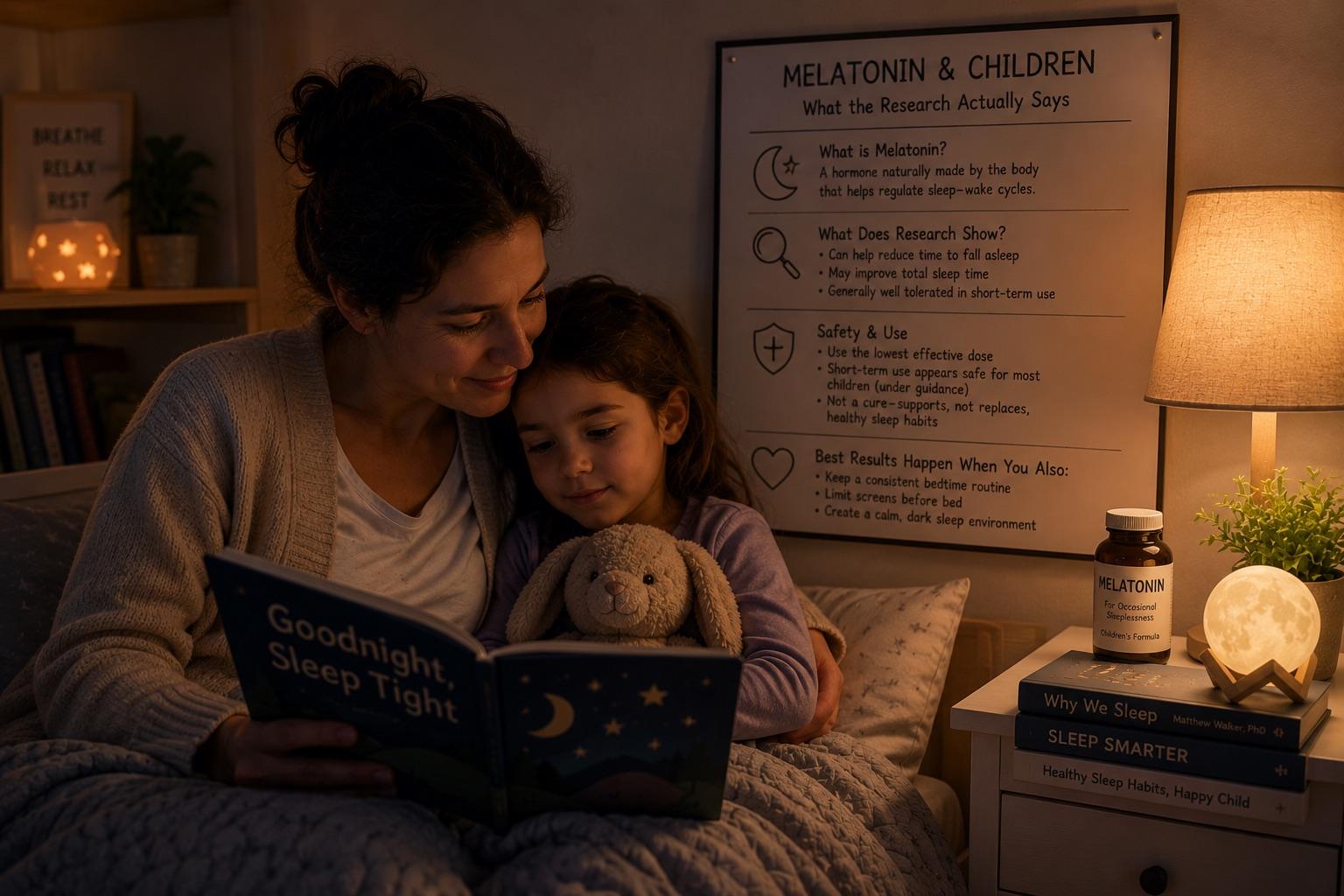
Melatonin is a hormone that helps set the body's sleep–wake clock. As a supplement, it can help some children fall asleep, including some children with autism whose sleep has not improved with routines alone, when it is used under medical guidance. But it is not the first step for ordinary bedtime struggles, which usually respond well to routines and behavioral strategies. In the United States, melatonin is sold as a dietary supplement, so the dose in the bottle may not match the label, and accidental ingestions by young children have risen sharply. Talk with your child's clinician before starting it.
The important distinction
Melatonin is a hormone involved in circadian signaling, not simply a natural sedative. Some children may use melatonin under medical guidance for short-term sleep timing support, but it should not replace a careful look at sleep routines, light exposure, anxiety, screens, breathing, medication effects, and neurodevelopmental factors.
What the evidence shows
Behavioral approaches come first. A task force of the American Academy of Sleep Medicine reviewed 52 studies of behavioral treatments for bedtime problems and night wakings in young children. Across the studies, 94 percent found the approaches effective, and more than 80 percent of children treated showed clinically significant improvement that lasted three to six months (Mindell et al., 2006).
Melatonin can help in specific situations. In a trial of 125 children and teenagers, nearly all with autism, whose sleep had not improved with behavioral strategies alone, a prolonged-release children's melatonin increased sleep by about 57 minutes a night compared with about 9 minutes on placebo, and helped them fall asleep faster. Sleepiness was the side effect reported more often with melatonin. The trial was conducted with the product's manufacturer (Gringras et al., 2017).
What is actually in the bottle
In the United States, melatonin is marketed as a dietary supplement, with less regulatory oversight than medicines (Rishi et al., 2023). Product testing shows why that matters:
- In an analysis of about 30 melatonin supplements, the actual melatonin content ranged from 83 percent less to 478 percent more than the label. More than 7 in 10 products were not within 10 percent of the label, and about a quarter contained serotonin (Erland & Saxena, 2017).
- Of 25 melatonin gummy products tested in 2023, 22 were inaccurately labeled, with melatonin ranging from 74 to 347 percent of the labeled amount. One product contained no melatonin at all, but did contain cannabidiol (CBD) (Cohen et al., 2023).
If melatonin is used, the American Academy of Sleep Medicine suggests choosing a product with the USP Verified mark, which indicates it was made under good manufacturing standards (Rishi et al., 2023).
Accidental ingestions are rising
Between 2012 and 2021, the yearly number of melatonin ingestions by children reported to U.S. poison control centers rose 530 percent; over the decade, more than 260,000 were reported. Hospitalizations and more serious outcomes also rose, mainly because of accidental ingestions by children aged 5 or younger. Five children needed a breathing machine, and two died (Lelak et al., 2022). Melatonin should be handled like any other medicine and kept out of children's reach (Rishi et al., 2023). Gummies that look and taste like candy deserve particular care.
What parents should know
Professional sleep organizations have raised concerns about rising use, inconsistent supplement labeling, accidental pediatric ingestions, and limited long-term safety data. This does not mean melatonin is never appropriate; it means it should be used thoughtfully and with clinical supervision.
Start with rhythm
For many children, the foundation is a predictable wake time, morning outdoor light, evening dimming, consistent meals, movement during the day, reduced screens before bed, and a calm routine that the family can actually maintain.
When to seek support
Seek professional guidance if sleep disruption is persistent, associated with snoring or pauses in breathing, restless legs, anxiety, night terrors, daytime dysfunction, developmental concerns, or if the child requires ongoing supplements to sleep.
How a naturopathic visit can help
We look at the whole sleep picture — routines, light, screens, anxiety, breathing, restless legs and the family's schedule — and start with the rhythm and behavioral changes that have the strongest evidence. If melatonin is considered, we discuss the dose, timing, duration, product quality and safe storage, and we coordinate with your child's pediatrician.
Practical takeaways
- Routines, light and behavioral strategies are the first step for most childhood sleep problems.
- Melatonin can help some children, including some children with autism, under medical guidance.
- Supplement doses often don't match the label; if melatonin is used, choose a USP Verified product.
- Store melatonin like a medicine, out of reach, especially gummies.
- Snoring, pauses in breathing or persistent sleep problems deserve a medical evaluation.