Nutrition for Children & Families
Feeding the Developing Brain: Key Nutrients for Children
Medically reviewed by Dr. Thiago Cavalcante, NMD How we review
The short answer
The brain grows fastest from pregnancy through the first years of life, and a handful of nutrients matter most during that window: iron, choline, omega-3 fats, iodine, zinc, vitamin B12, folate, and enough protein and energy overall. Most children get what they need from a varied diet. Supplements are for specific, identified gaps — not a general brain boost.
Why timing matters
Nutrients act on the developing brain according to timing, dose and duration. A shortfall during a period of rapid growth can have effects that later catch-up doesn’t fully reverse (Georgieff, 2007). That is why the first 1,000 days — from pregnancy to a child’s second birthday — are considered a golden window for nutrition (Cusick & Georgieff, 2016).
The nutrients that matter most
- Iron supports myelination (the insulation around nerve fibers), the production of neurotransmitters and the memory circuits of the hippocampus (Georgieff, 2007). Iron deficiency in infancy and early childhood can have lasting effects on development, even before it causes anemia (Baker & Greer, 2010).
- Choline helps build cell membranes and the neurotransmitter acetylcholine. Eggs, meat, fish, dairy and soy are good sources. Children need about 200 mg a day at ages 1–3 and 250 mg at ages 4–8 (NIH Office of Dietary Supplements).
- Omega-3 fats (DHA and EPA) are concentrated in the brain and the retina. Fish is the main food source. The FDA and EPA advise two servings a week of fish from their “Best Choices” list for children aged 1 to 11, in portions of about 1 ounce at ages 1–3, 2 ounces at 4–7, 3 ounces at 8–10 and 4 ounces at 11 (FDA).
- Iodine is needed to make thyroid hormone, which guides brain development; it matters most during pregnancy and breastfeeding. Iodized salt, dairy, eggs and seafood supply it.
- Zinc, vitamin B12 and folate support cell growth and nerve function. Children on vegan diets need a reliable source of B12, usually a fortified food or a supplement.
- Protein and energy. The brain can’t make good use of any of these nutrients if a child simply isn’t eating enough.
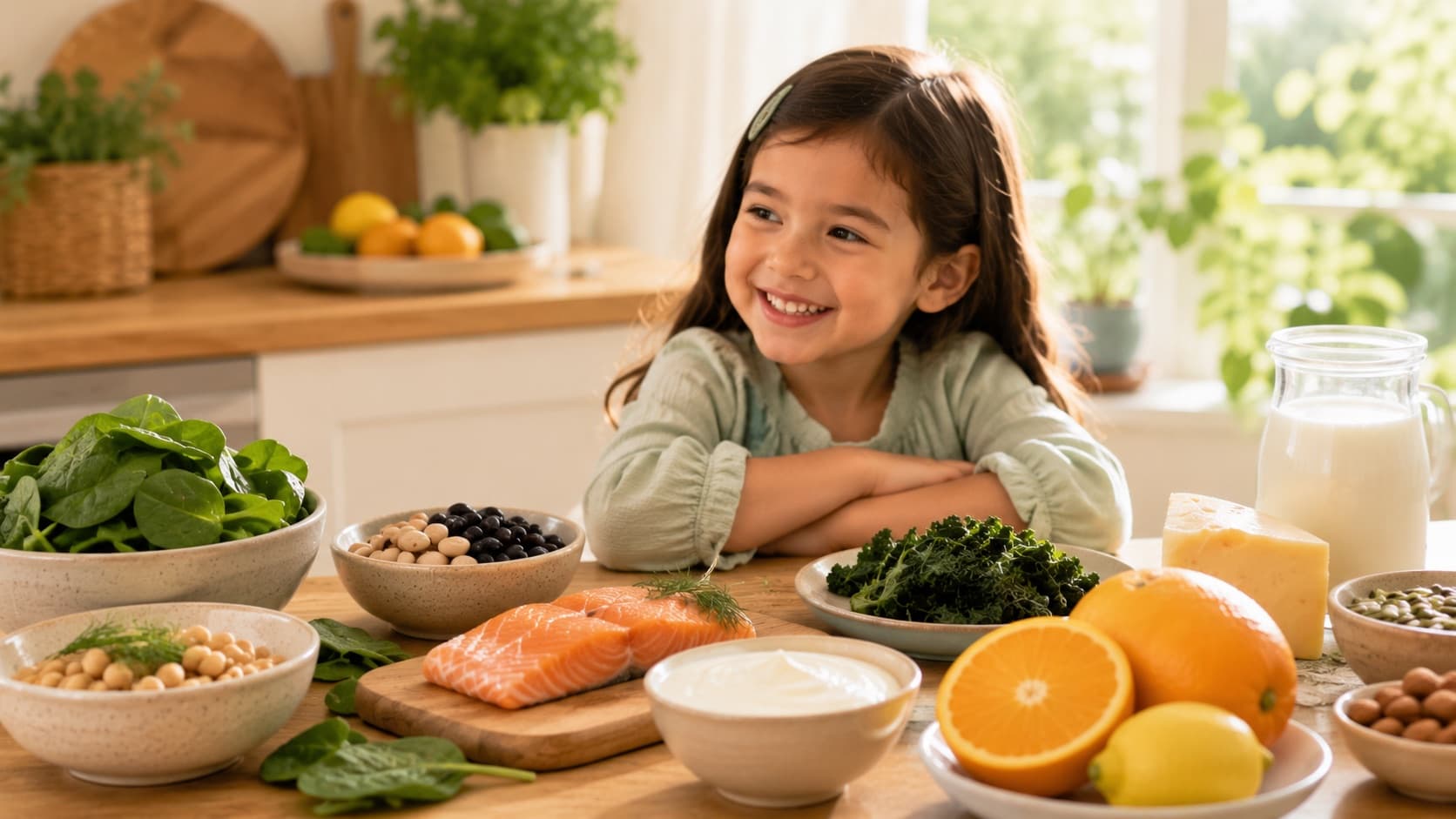
Everyday food that feeds the brain
- Eggs a few times a week
- Fish lower in mercury, such as salmon, sardines, trout, cod or canned light tuna
- Meat, poultry, beans and lentils
- Dairy, or fortified alternatives
- A range of vegetables, fruits and whole grains
- Iodized salt in home cooking, used sparingly
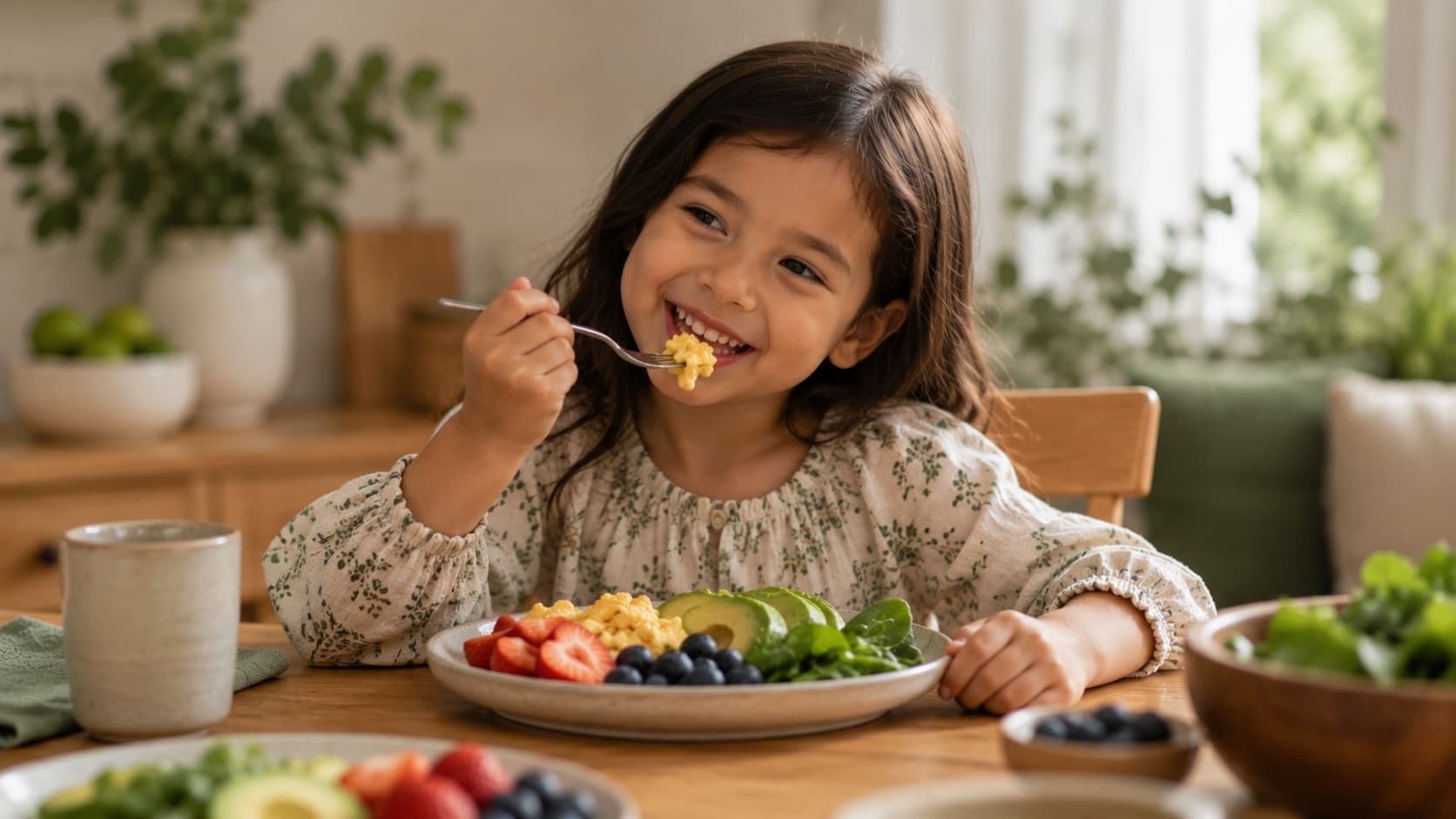
Family meals do much of the work. A varied plate several times a day covers more nutrients than any single “superfood.”
When supplements make sense
Supplements are useful for specific situations, not as insurance:
- Vitamin D for infants, and iron for breastfed babies from about four months, as your pediatrician advises.
- Vitamin B12 for children on vegan diets.
- Iron when a deficiency has been confirmed by a blood test.
- Sometimes omega-3s or choline, when a child’s diet leaves out fish or eggs.
More is not better. Iron and zinc are harmful in excess, and iron was once one of the leading causes of fatal accidental poisoning in young children (Manoguerra et al., 2005). Keep all supplements locked away, and treat products marketed as brain boosters with caution: they are no substitute for a varied diet.
When to call your pediatrician
- Poor growth or weight loss
- A very limited range of foods, or whole food groups missing
- Unusual pallor, tiredness or irritability, or eating non-food items such as ice or dirt
- Delays in speech, movement or learning
- A child on a vegan diet who is not taking vitamin B12
How a naturopathic visit can help
We review what your child actually eats over a typical week and look for the nutrients most likely to fall short given the family’s eating pattern — vegetarian, allergy-restricted, picky or simply busy. We order laboratory tests only when the result would change the plan, such as ferritin when iron deficiency is suspected. When a supplement is needed, we choose a form and dose suited to the child’s age and weight, set a time to recheck, and coordinate with your pediatrician and, where helpful, a pediatric dietitian.
Practical takeaways
- Iron, choline, omega-3s, iodine, zinc and B12 are the brain’s priority nutrients.
- A varied diet with eggs, fish, meat or legumes, dairy and plenty of plants covers most children.
- Supplements fill confirmed or predictable gaps; they don’t boost a healthy child’s brain.
- Keep iron and other supplements out of children’s reach.
Research references
- Georgieff MK. Nutrition and the developing brain: nutrient priorities and measurement. Am J Clin Nutr. 2007;85(2):614S-620S https://doi.org/10.1093/ajcn/85.2.614S
- Cusick SE, Georgieff MK. The Role of Nutrition in Brain Development: The Golden Opportunity of the “First 1000 Days”. J Pediatr. 2016;175:16-21 https://doi.org/10.1016/j.jpeds.2016.05.013
- Baker RD, Greer FR. Diagnosis and prevention of iron deficiency and iron-deficiency anemia in infants and young children (0–3 years of age). Pediatrics. 2010;126(5):1040-1050 https://doi.org/10.1542/peds.2010-2576
- NIH Office of Dietary Supplements. Choline: Fact Sheet for Health Professionals https://ods.od.nih.gov/factsheets/Choline-HealthProfessional/
- U.S. Food and Drug Administration. Advice about Eating Fish https://www.fda.gov/food/consumers/advice-about-eating-fish
- Manoguerra AS, et al. Iron ingestion: an evidence-based consensus guideline for out-of-hospital management. Clin Toxicol (Phila). 2005;43(6):553-570 https://doi.org/10.1081/clt-200068842