Nutrition for Children & Families
Iron, Zinc, and Vitamin D in Children: What Parents Should Know
Medically reviewed by Dr. Thiago Cavalcante, NMD How we review
The short answer
Iron, zinc and vitamin D support growth, energy, learning and immune function. Most children over a year old get enough iron and zinc from a varied diet; vitamin D is the one most often recommended as a supplement. Breastfed infants, very selective eaters, children on restricted or vegan diets and children with certain medical conditions are the exceptions worth discussing with your pediatrician. More is not better: iron and zinc are harmful in excess.
Iron
Iron carries oxygen in the blood and supports brain development. Iron deficiency in infancy and early childhood can affect development even before it causes anemia, which is why the AAP recommends screening for anemia at about 12 months (Baker & Greer, 2010).
- How much: 11 mg a day at 7–12 months, 7 mg at 1–3 years, 10 mg at 4–8 years and 8 mg at 9–13 years (NIH Office of Dietary Supplements).
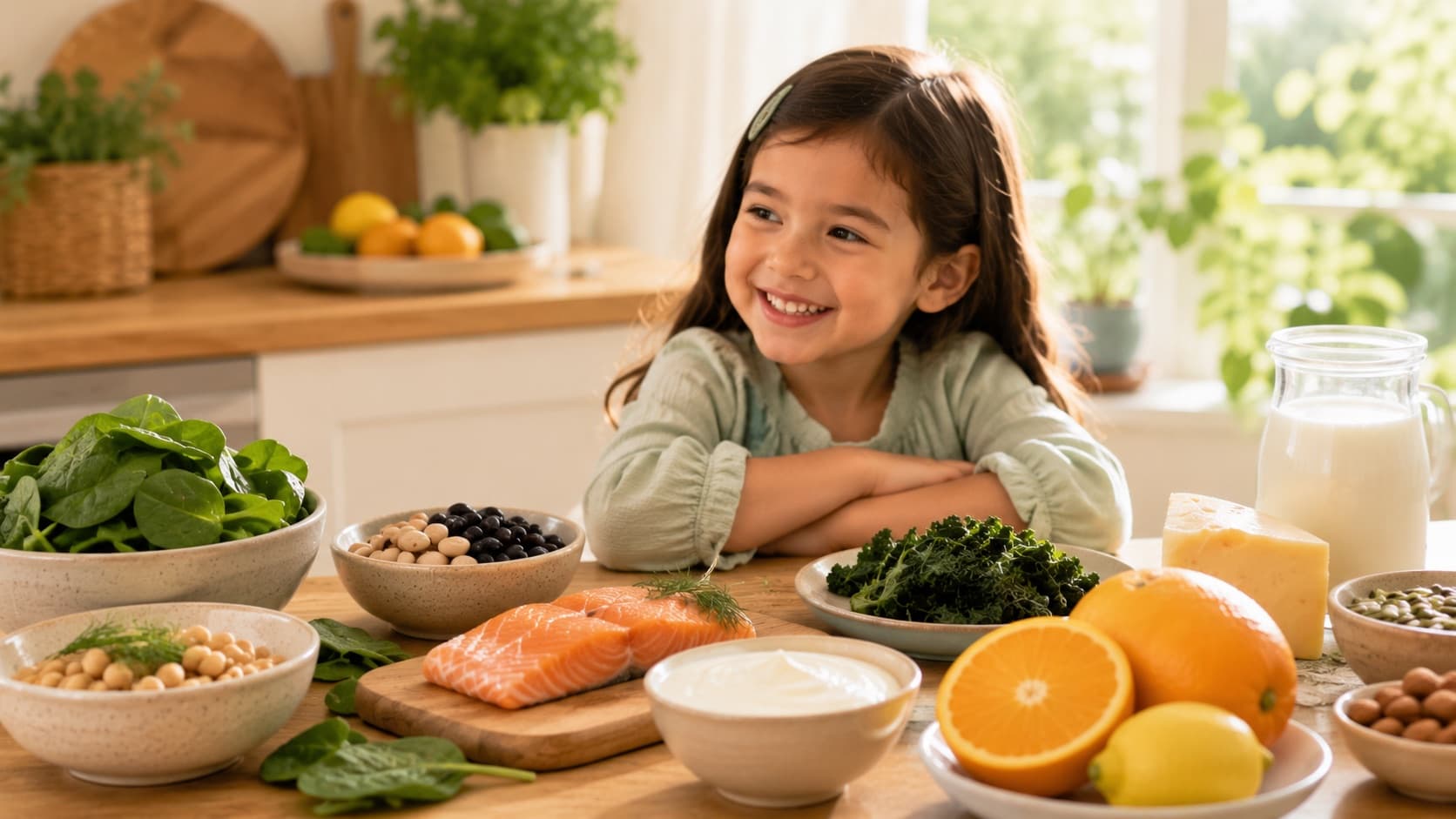
- Best sources: red meat, poultry and fish, which provide the most easily absorbed form, plus beans, lentils, tofu and iron-fortified cereals. Pairing plant sources with foods rich in vitamin C — citrus, tomatoes, peppers, strawberries — improves absorption.
- Watch for: large amounts of cow’s milk, which is low in iron and can crowd out iron-rich foods in toddlers; heavy periods in teenagers; and vegetarian diets without planning.
- Supplements: the AAP recommends iron for exclusively breastfed babies from about four months until iron-rich foods are established (Baker & Greer, 2010). Otherwise, supplement only when a deficiency is confirmed, and recheck levels afterwards.
Zinc
Zinc supports growth, wound healing, taste and immune function.
- How much: 3 mg a day from 7 months to 3 years, 5 mg at 4–8 years and 8 mg at 9–13 years (NIH Office of Dietary Supplements).
- Best sources: meat, poultry and seafood, beans, nuts, whole grains and dairy. Zinc from plant foods is absorbed less well, so vegetarian children may need more attention.
- Signs it may be low: slow growth, a poor appetite and frequent infections — none of them specific, so a diet review and testing come before supplements.
- Too much: the upper limit is 7 mg a day at ages 1–3 and 12 mg at ages 4–8, and long-term excess can cause copper deficiency (NIH Office of Dietary Supplements). Check how much zinc a child already gets from multivitamins and fortified foods before adding more.
Vitamin D
Vitamin D helps the body absorb calcium for strong bones; severe deficiency causes rickets. Few foods contain much of it, and sun exposure varies and carries a skin-cancer risk, so the AAP recommends at least 400 IU a day for infants, children and adolescents (Wagner & Greer, 2008).
- Infants: breastfed and partially breastfed babies need a 400 IU supplement starting soon after birth; formula-fed babies need one if they drink less than about 32 oz of formula a day.
- Older children: fortified milk or alternatives, eggs and fatty fish help, but many children still get less than 400 IU from food alone.
- Arizona sun is not a guarantee: sunscreen, clothing, darker skin and time indoors all reduce how much vitamin D the skin makes. Routine blood tests aren’t usually needed in healthy children; ask about testing if your child has bone pain, slow growth, a condition that affects absorption, or very little time outdoors.
Why more isn’t better
Iron is one of the most dangerous medicines for a small child to swallow by accident. Between 1983 and 1991, iron caused more than 30% of deaths from accidental ingestion of medicines by children in the United States (Manoguerra et al., 2005). Keep iron and multivitamins with iron locked away in child-resistant containers, and never call them candy. If your child swallows iron tablets, call Poison Control right away at 1-800-222-1222.
When to call your pediatrician
- Pale skin, unusual tiredness or irritability, or craving non-food items such as ice or dirt
- Slow growth or weight loss
- Bone pain, bowed legs or late walking
- A diet that leaves out whole food groups — for example, a vegan diet or several food allergies
- Any accidental swallowing of iron or vitamins (call Poison Control first)
How a naturopathic visit can help
We review what your child actually eats over a typical week, estimate where the gaps are likely to be, and order tests only when they would change the plan — for example, ferritin when iron deficiency is suspected. When a supplement is needed, we choose a form and dose suited to the child’s age and weight, set a time to recheck, and avoid stacking products that contain the same nutrient. We coordinate with your pediatrician, particularly when anemia or growth is a concern.
Practical takeaways
- Vitamin D: 400 IU a day for breastfed babies from soon after birth, and for older children who don’t get enough from food.
- Iron: iron-rich foods from six months; supplements for breastfed babies from about four months, otherwise only when a deficiency is confirmed.
- Zinc: food first, and check labels before adding a supplement.
- Keep iron and vitamins locked away — an accidental overdose of iron is dangerous.
Research references
- Baker RD, Greer FR. Diagnosis and prevention of iron deficiency and iron-deficiency anemia in infants and young children (0–3 years of age). Pediatrics. 2010;126(5):1040-1050 https://doi.org/10.1542/peds.2010-2576
- Wagner CL, Greer FR. Prevention of rickets and vitamin D deficiency in infants, children, and adolescents. Pediatrics. 2008;122(5):1142-1152 https://doi.org/10.1542/peds.2008-1862
- NIH Office of Dietary Supplements. Iron: Fact Sheet for Health Professionals https://ods.od.nih.gov/factsheets/Iron-HealthProfessional/
- NIH Office of Dietary Supplements. Zinc: Fact Sheet for Health Professionals https://ods.od.nih.gov/factsheets/Zinc-HealthProfessional/
- Manoguerra AS, et al. Iron ingestion: an evidence-based consensus guideline for out-of-hospital management. Clin Toxicol (Phila). 2005;43(6):553-570 https://doi.org/10.1081/clt-200068842