Neurodevelopment & Behavioral Health
The Gut-Brain Connection in Children
Medically reviewed by Dr. Thiago Cavalcante, NMD How we review
The short answer
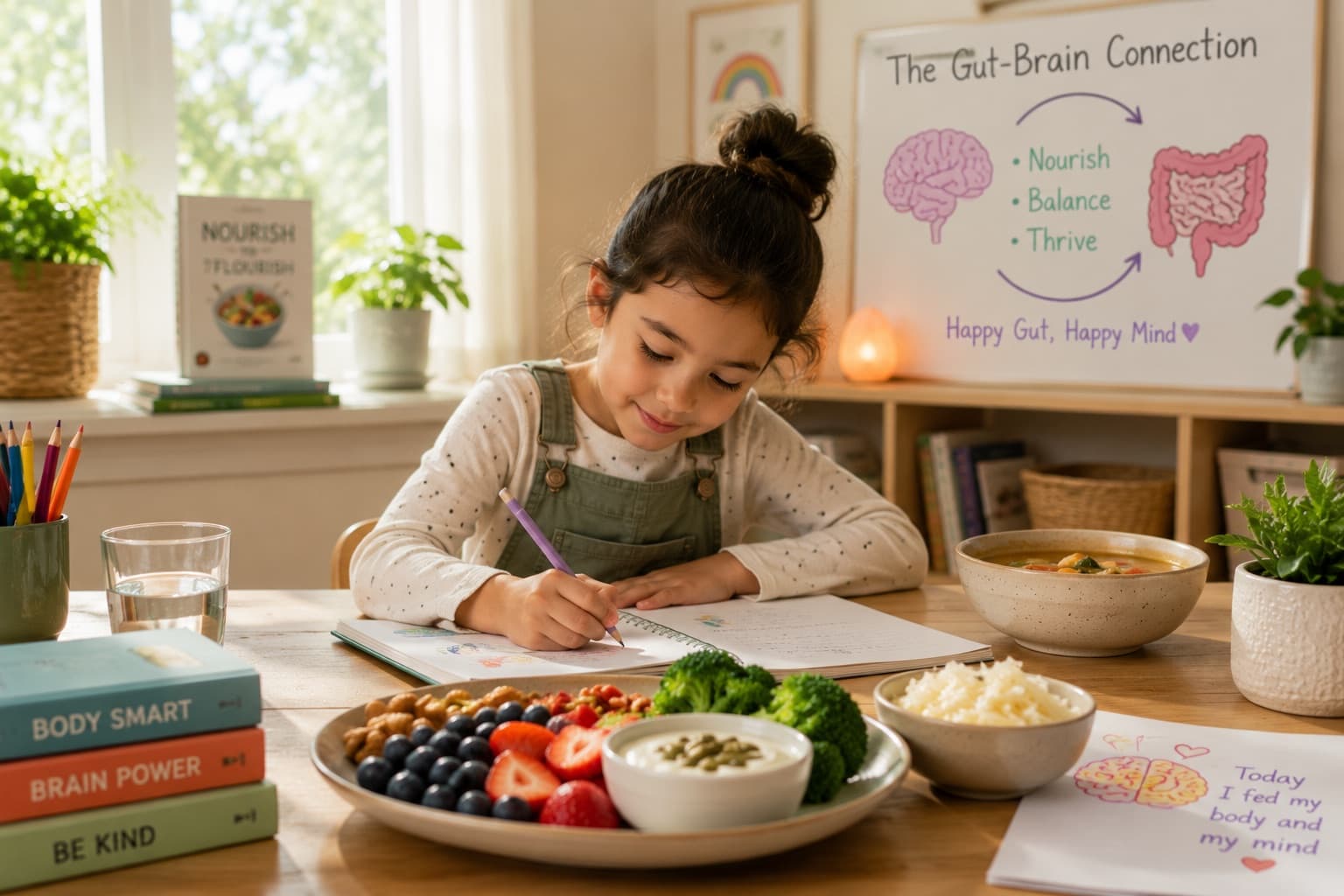
The gut and the brain are in constant two-way communication through nerves, hormones, the immune system and the microbes that live in the intestine. In children, the connection shows up in familiar ways: stomach aches before school, constipation that affects mood and sleep, and anxiety that upsets digestion. Research on the microbiome and behavior is promising but still early. What helps most is practical: regular meals with enough fiber and fluid, a toilet routine, good sleep, and treating anxiety directly.
How the gut and brain talk
The gut has its own extensive network of nerves and is linked to the brain by the vagus nerve. Gut microbes produce compounds that can influence immune signaling and nerve function, while stress hormones change how the gut moves and how sensitive it is (Cryan et al., 2019). Much of the detailed evidence comes from animal studies; in children, the research so far is mostly observational (Naspolini et al., 2024).
Stomach aches with no clear cause
Recurrent abdominal pain is common in school-age children, and in most cases no disease is found. These functional pain disorders are real: the nerves of the gut become more sensitive, and stress and anxiety turn up the volume (Hyams et al., 2016). Reassurance, a predictable routine and keeping the child in school all matter. Cognitive behavioral therapy and gut-directed hypnotherapy have helped in trials, although the evidence is still of low quality (Abbott et al., 2017). A specific probiotic, *Lactobacillus rhamnosus* GG, modestly improved symptoms in a meta-analysis, mainly in children with irritable bowel syndrome (Horvath et al., 2011).
Constipation, mood and behavior
Constipation is very common in childhood (Tabbers et al., 2014). Holding in stool leads to hard, painful bowel movements, which leads to more holding — a cycle that can affect appetite, mood, sleep and toileting accidents. Guidelines recommend education, a regular toilet routine, a normal intake of fiber and fluids, and medication when needed. Extra fiber or fluid beyond normal amounts hasn’t been shown to help, and probiotics are not recommended for constipation (Tabbers et al., 2014).
The microbiome and behavior: what we know
Differences in gut microbes have been reported in children with autism, ADHD and anxiety, and early-life microbiome patterns have been linked with later development (Naspolini et al., 2024). But association is not causation, and the studies are small and inconsistent. There is not yet a validated microbiome test, probiotic or diet that treats behavioral or developmental conditions in children. Be cautious about products and protocols that promise otherwise.
What helps
- Regular meals and snacks that include fruits, vegetables, legumes and whole grains
- Water throughout the day
- A daily, unhurried toilet time after a meal, with feet supported on a stool
- Physical activity every day
- Enough sleep, at regular times
- Recognizing and treating anxiety — through routines, coping skills and, when needed, therapy
When to call your pediatrician
- Pain that wakes your child at night, or pain centered away from the belly button
- Weight loss, poor growth or delayed puberty
- Blood in the stool, or black stools
- Persistent vomiting, especially green vomit
- Fever with abdominal pain, or diarrhea that lasts more than two weeks
- Constipation that began in the first weeks of life, or that comes with leg weakness or back problems
- Anxiety or low mood that is affecting school, friendships or sleep
How a naturopathic visit can help
We take the time a gut–brain problem needs: a detailed history of stools, diet, sleep, school and stress, and an examination that looks for warning signs. Most children respond to practical steps — food, fluids, toileting routines, activity and sleep — combined with support for anxiety. We use probiotics selectively, for situations in which they have been studied, and we work with your pediatrician, a pediatric gastroenterologist or a therapist when that is what your child needs.
Practical takeaways
- The gut and brain influence each other through nerves, hormones, immunity and microbes.
- Functional stomach aches are real and respond to reassurance, routine and support for anxiety.
- Treat constipation actively — it affects far more than the bowel.
- Microbiome science is promising, but no test or product yet treats behavior.
Research references
- Cryan JF, et al. The Microbiota-Gut-Brain Axis. Physiol Rev. 2019;99(4):1877-2013 https://doi.org/10.1152/physrev.00018.2018
- Hyams JS, et al. Functional Disorders: Children and Adolescents. Gastroenterology. 2016 https://doi.org/10.1053/j.gastro.2016.02.015
- Abbott RA, et al. Psychosocial interventions for recurrent abdominal pain in childhood. Cochrane Database Syst Rev. 2017;1(1):CD010971 https://doi.org/10.1002/14651858.CD010971.pub2
- Horvath A, et al. Meta-analysis: Lactobacillus rhamnosus GG for abdominal pain-related functional gastrointestinal disorders in childhood. Aliment Pharmacol Ther. 2011;33(12):1302-1310 https://doi.org/10.1111/j.1365-2036.2011.04665.x
- Tabbers MM, et al. Evaluation and treatment of functional constipation in infants and children: evidence-based recommendations from ESPGHAN and NASPGHAN. J Pediatr Gastroenterol Nutr. 2014;58(2):258-274 https://doi.org/10.1097/MPG.0000000000000266
- Naspolini NF, et al. The Gut Microbiome in the First One Thousand Days of Neurodevelopment: A Systematic Review from the Microbiome Perspective. Microorganisms. 2024;12(3):424 https://doi.org/10.3390/microorganisms12030424